Detergent Powder Market in Bangladesh Sees Quiet Revolution, Surpassing 50 Billion Taka
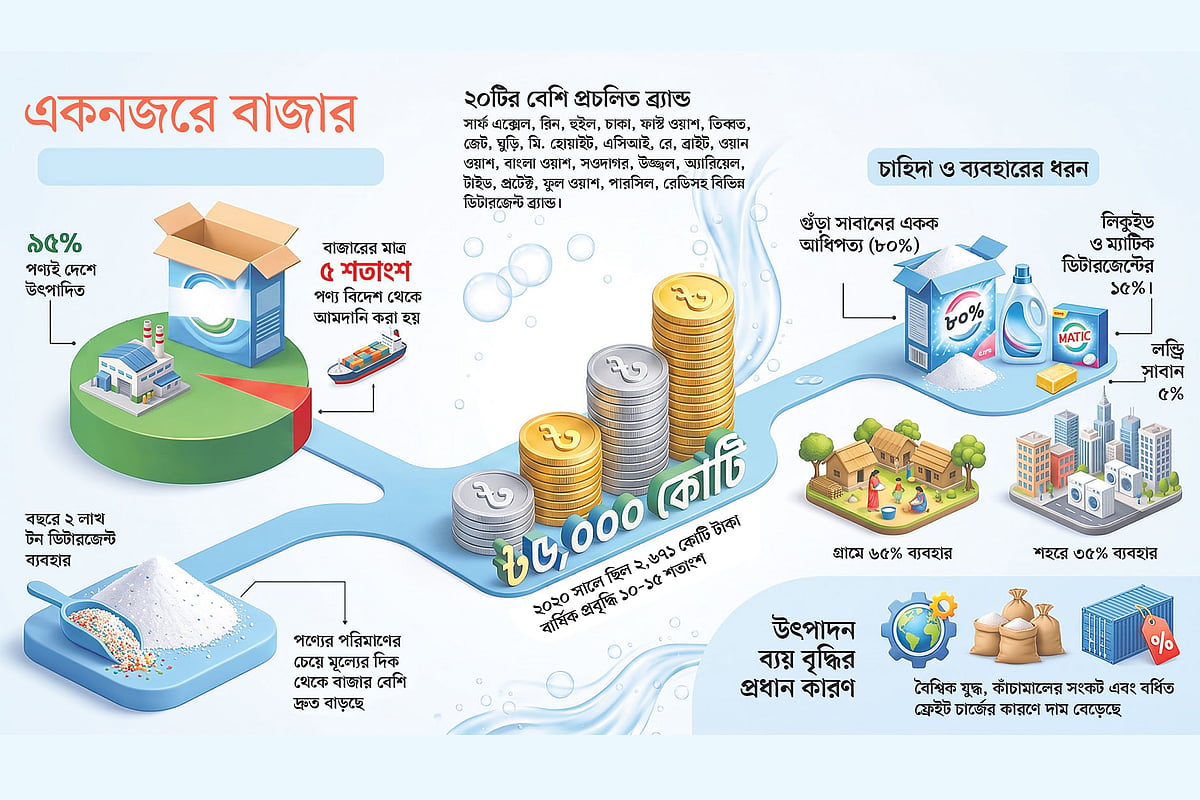
The detergent powder market in Bangladesh has experienced a significant transformation, growing to an estimated 4,500 to 5,000 crore taka (approximately $400-450 million USD) over the past five years. This represents a substantial increase, with a 10-15% annual growth in value and a supply volume reaching nearly two lakh tons. Historically dominated by laundry soaps, the market has shifted decisively towards detergent powders, with liquid detergents poised to become the future dominant form. A 2020 market survey indicated a market size of 77,382 tons, valued at 2,671 crore taka, with an annual sales growth of around 11% at that time.
Multinational corporations, particularly Unilever, have historically held a large share, but local companies are increasingly participating. Key players like Unilever, Kohinoor Chemical, Square Toiletries, and Collol Group (which acquired the legacy "Jet" brand) along with foreign company RSPL, supply approximately 95% of the market. Unilever, established in Bangladesh in 1962, has a strong presence with brands like Wheel, Rin, and Surf Excel. Kohinoor Chemical pioneered spray-dried detergent powder with its "Jet" brand in 1968, a brand now managed by Collol Group, which has modernized its production.
Despite market growth, companies face challenges due to increased production costs driven by the rising prices of imported raw materials like LABSA, exacerbated by global events such as the conflict in the Middle East. While prices were stabilized for three years post-COVID, recent global factors necessitated price increases. Companies are striving to maintain product quality and affordability through production efficiency and sourcing high-quality raw materials. The shift towards liquid detergents is notable, driven by convenience for household chores and washing machines, though powder detergents remain preferred for heavy stains. The overall laundry category market is projected to reach 6,000 crore taka, with detergents forming 5,000 crore taka of that. Rural areas account for 65% of detergent consumption, reflecting the demographic distribution.
The Bangladeshi detergent market's evolution from traditional soaps to sophisticated powders and emerging liquids highlights a dynamic consumer goods sector. This quiet revolution is driven by a confluence of factors: technological advancements enabling quality improvements, increasing consumer purchasing power, and the strategic market penetration by both multinational and domestic players. The reliance on imported raw materials presents a significant vulnerability, exposing the sector to global supply chain disruptions and currency fluctuations. Future growth hinges on balancing cost-effective production with consumer affordability, fostering innovation in eco-friendly formulations, and potentially developing local raw material sources to mitigate import dependency. The increasing preference for liquid detergents suggests a broader trend towards convenience and specialized product offerings, mirroring global market shifts and indicating a need for companies to adapt their product portfolios and marketing strategies accordingly.
AI-generated to prompt reflection — not editorial opinion, not advice, not a statement of fact. How this works.