Device Translates Light to Sound for Blind Individuals to Experience Solar Eclipse
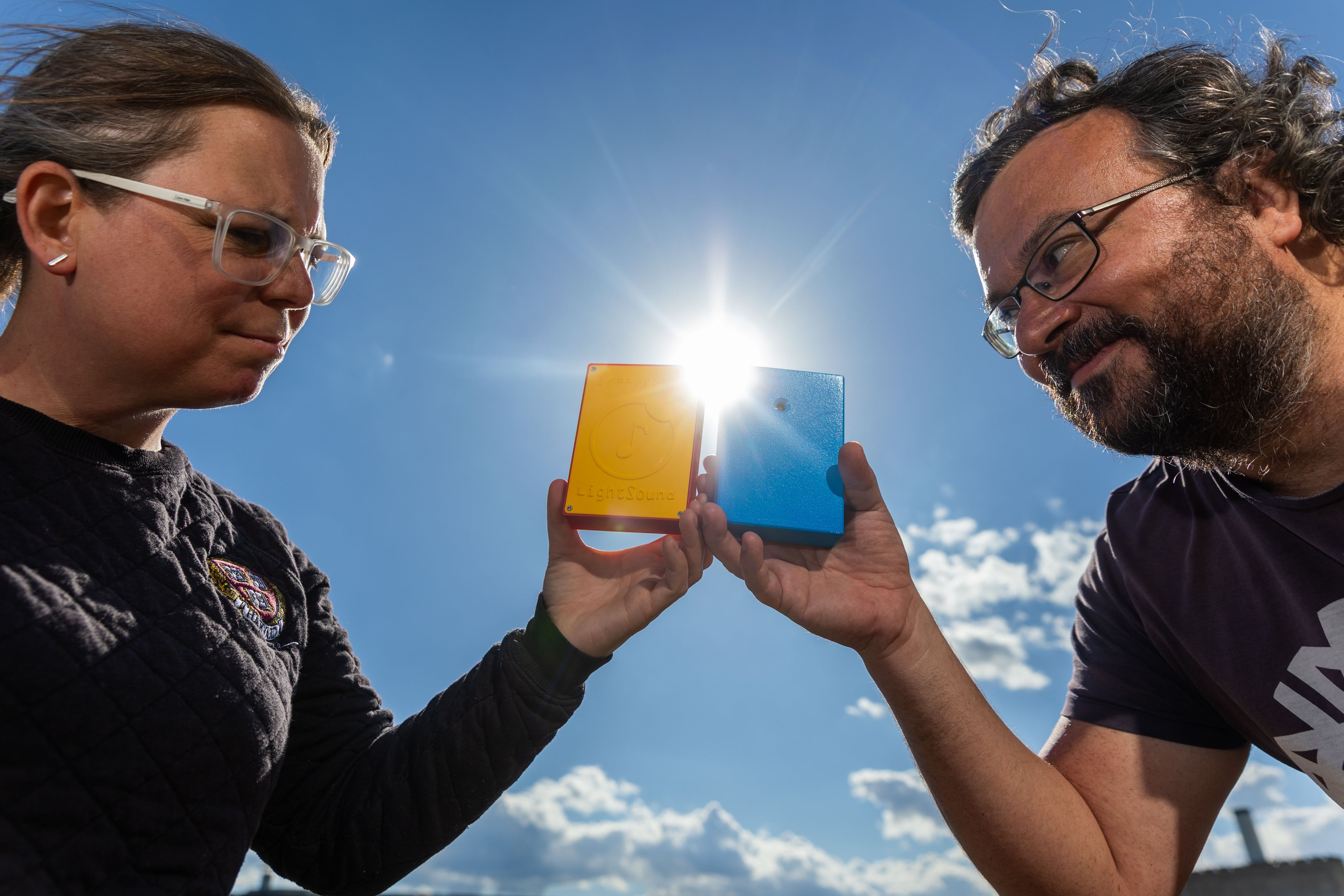
A new device developed at the Institute of Space Sciences of the Autonomous University of Barcelona (UAB) will enable visually impaired individuals to experience the upcoming solar eclipse. This innovative apparatus converts light into sound, allowing people who are blind to perceive the astronomical phenomenon. The technology works by translating the varying light intensity of the eclipse into audible frequencies. This breakthrough promises to make celestial events accessible to a wider audience, breaking down sensory barriers. Previously, visually impaired individuals relied on descriptions or tactile models to understand such events. The UAB's invention offers a direct sensory experience, fostering a deeper connection with astronomical occurrences. The institute's researchers have focused on creating an intuitive and engaging way for the blind community to participate in scientific observation. This development marks a significant step forward in inclusive science education and public engagement with astronomy.
This technological innovation democratizes access to astronomical events, transforming a visual spectacle into an auditory experience for the visually impaired. By converting light data into sound, the device addresses a fundamental accessibility gap in scientific observation. The system's effectiveness hinges on the nuanced translation of light intensity variations into meaningful auditory cues, offering a novel sensory pathway. Future iterations could explore haptic feedback or more complex soundscapes to further enrich the experience, potentially influencing how educational institutions and planetariums design inclusive programming. This approach highlights the potential of cross-modal sensory translation to enhance public engagement with science in the AI era, where personalized and adaptive learning experiences are increasingly paramount.
AI-generated to prompt reflection — not editorial opinion, not advice, not a statement of fact. How this works.