Devil Worm Discovered Deep Within Earth Redefines Life's Limits
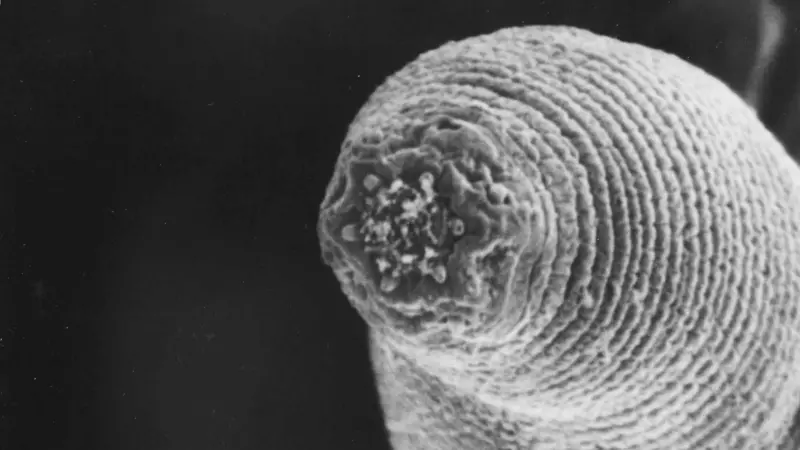
Scientists have discovered the Halicephalobus mephisto, or 'devil worm,' living at depths of 1.3 kilometers below the Earth's surface, in conditions of extreme heat and pressure. This microscopic nematode, only as wide as a few human hairs, thrives in subterranean environments previously thought uninhabitable for animal life. Its discovery in 2011 dramatically expanded the known boundaries of Earth's deep biosphere, challenging earlier scientific beliefs that life could not exist more than 30 cm below the surface. The worm survives by clinging to rock surfaces and feeding on microbial communities, existing in a unique, ancient food web independent of solar energy or oxygen-rich atmospheres. This finding has spurred new questions about the origins and future potential for life in extreme environments, both on Earth and potentially elsewhere. Researchers are actively studying the devil worm's descendants, obtained through a remarkable series of events involving a single, parthenogenetically reproducing female found in a South African gold mine. These studies aim to understand the specific adaptations that allow the species to survive and reproduce in such harsh conditions. The worm's ability to thrive at temperatures around 37°C, which are lethal to many surface-dwelling organisms, is a key area of investigation. Its genetic makeup reveals unusually high numbers of heat-shock proteins, crucial for protecting cellular structures from extreme temperatures. Further research is exploring how the worm's unique metabolic processes, like its temperature-dependent cytochrome c oxidase, contribute to its survival. The possibility of parthenogenesis as a survival strategy in the vast, sparsely populated deep Earth is also being considered, as it allows reproduction even when encounters with other individuals are rare. The existence of the devil worm suggests that complex life forms may be far more widespread in Earth's subsurface than previously imagined, opening up vast possibilities for future biological discoveries.
The discovery of the devil worm in Earth's deep crust underscores the remarkable adaptability of life and challenges anthropocentric biases regarding habitable environments. While celebrating this scientific achievement, it's crucial to consider the implications for astrobiology and the search for extraterrestrial life, suggesting that subsurface oceans or rocky interiors on other planets could harbor complex organisms. Future research should focus on understanding the evolutionary pressures that led to such extreme adaptations, particularly the balance between the resilience offered by asexual reproduction and the long-term genetic diversity benefits of sexual reproduction. This highlights a fundamental tension in evolutionary biology: survival in extreme niches versus the capacity for sustained adaptation over geological timescales. The exploration of the deep biosphere also raises questions about resource utilization and potential biotechnological applications derived from extremophiles, while emphasizing the need for conservation of these unique, fragile ecosystems.
AI-generated to prompt reflection — not editorial opinion, not advice, not a statement of fact. How this works.