Dhaka Police Investigate Bomb Found Near Metro Station, Suspect Links to Extremist Groups
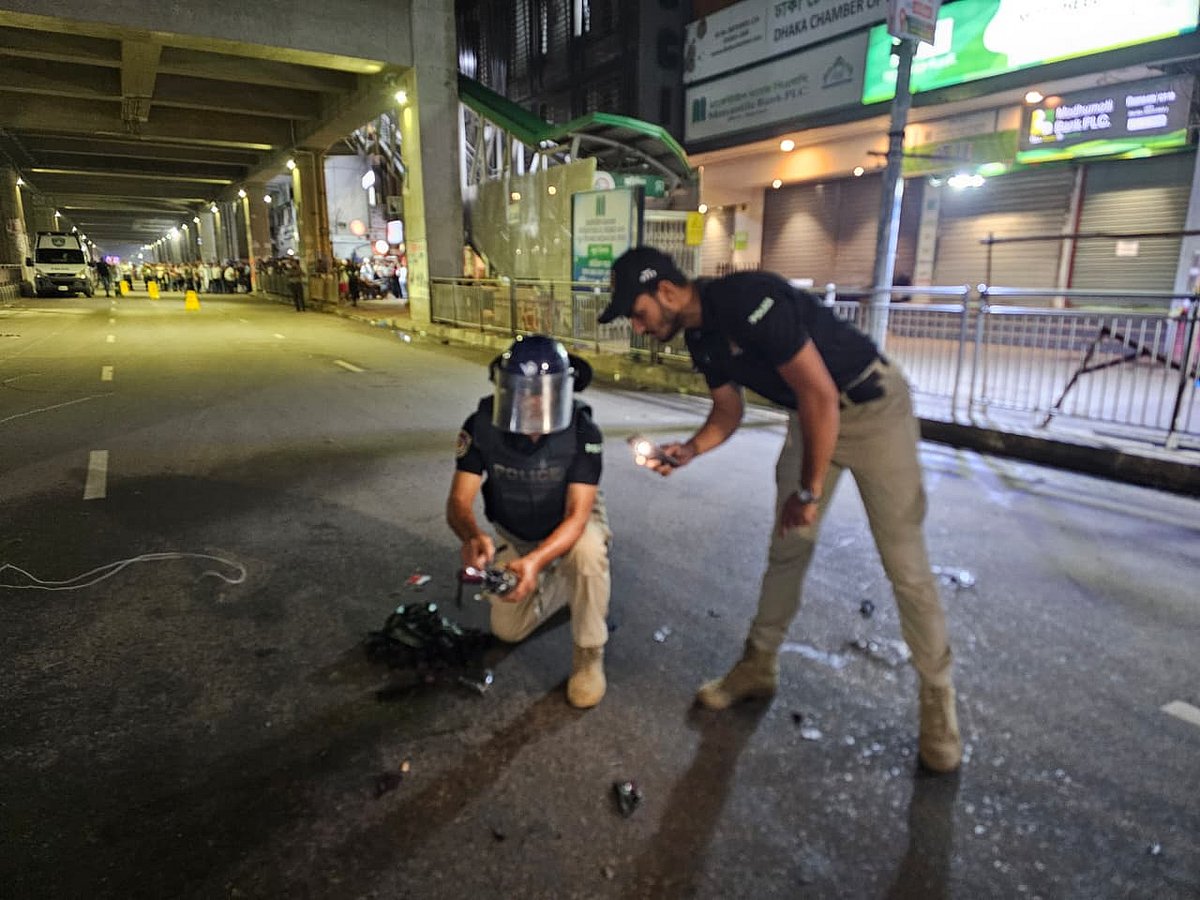
Dhaka police have filed a case under the Explosives Act following the discovery of a bomb near the Motijheel Metro Rail Station in the capital city. Authorities are actively investigating the origin of the explosive device, attempting to identify who placed it, and determining if any extremist networks are involved. Investigators are also examining potential links between this incident and recent explosions in Keraniganj, Jatrabari, Sayedabad, and Cumilla. The case was filed on Friday night by Motijheel Police Station Sub-Inspector Mirza Mohammad Mukta, charging individuals with illegally manufacturing, possessing, transporting, or using explosives, as well as conspiracy to commit a crime. The investigation is being conducted by both the Motijheel Police Station and the Dhaka Metropolitan Police (DMP)'s Counter Terrorism and Transnational Crime (CTTC) unit. DMP Additional Commissioner Mohammad Osman Ghani stated that no suspects have been identified yet, but efforts are underway to trace the bomb's origin and apprehend those responsible. The bomb-like object was found inside an umbrella near the generator room under the metro station by police on duty. A bomb disposal unit successfully neutralized the improvised explosive device (IED). During the neutralization, a pedestrian, Miraj Hossain, an employee of the Ministry of Education, sustained injuries from shrapnel in his eye. The case details mention that a procession for the Ulta Rath Yatra festival was underway on Friday afternoon. Traffic Sergeant Kawshar Hossain, on duty in the Motijheel area, reported to the DMP control room around 6 PM that an umbrella emitting light was found under the metro station, leading to the police response and bomb disposal. Assistant Commissioner of Motijheel region police, Hossain Mohammad Farabi, indicated that CCTV footage did not reveal how or when the bomb was placed, noting that some cameras in the area are non-functional. It is suspected that the bomb was placed during the Ulta Rath Yatra procession, possibly with the intent to cause disruption. Police are exploring connections to a significant explosion that occurred on December 26th of the previous year at a house in Keraniganj, where a large quantity of explosives, including hydrogen peroxide, acetone, and nitric acid, along with nine live bombs, were recovered. The director of the associated Umul Qurra International Madrasa, Sheikh Al Amin, and 17 others were arrested in that incident. Al Amin, identified as a member of the neo-JMB extremist group with ISIS ideology, was reportedly injured in an accidental explosion while making bombs. Law enforcement agencies have linked this group to three other incidents between the Keraniganj explosion and March of this year, including an attack on police in Jatrabari in February, where bombs similar to those found in Keraniganj were recovered. Further incidents include an explosion in Sayedabad in March and another at a Shiv temple in Cumilla city during the same month. Police have identified two close associates of Sheikh Al Amin, Nazmul Hasan Mamun and Mohammad Arif, through CCTV footage as being involved in these incidents. The CTTC unit noted that the Keraniganj bomb was made from hydrogen peroxide, acetone, and nitric acid, while the bomb found in Motijheel was constructed within a GI pipe and equipped with a circuit and battery.
The discovery of an explosive device near a major public transport hub in Dhaka, coupled with ongoing investigations into potential links with previous incidents and extremist groups, highlights persistent security challenges. The complexity of tracing the bomb's origin and the involvement of sophisticated IEDs suggest a need for enhanced intelligence gathering and inter-agency coordination. The mention of damaged CCTV cameras and blind spots underscores the critical importance of maintaining and upgrading surveillance infrastructure to deter and investigate such threats effectively. Future security strategies should consider the evolving tactics of extremist elements and the potential for disruption during public gatherings, emphasizing proactive threat assessment and robust response mechanisms to safeguard public spaces.
AI-generated to prompt reflection — not editorial opinion, not advice, not a statement of fact. How this works.