Dhaka Suffers Day of Flooding and Gridlock Due to Heavy Rain
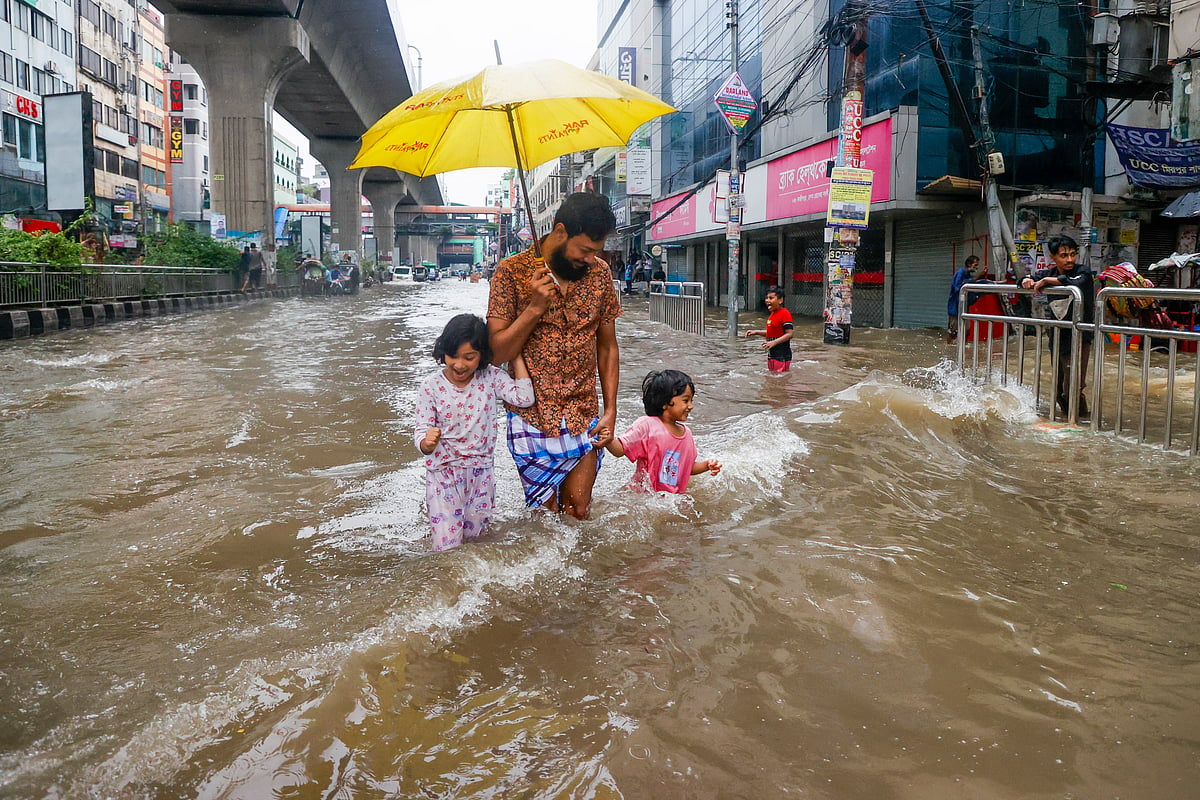
Dhaka experienced a day of significant hardship on Sunday, February 25th, as heavy rainfall that began the previous night continued until noon, inundating large parts of the capital city. The downpour resulted in widespread waterlogging, causing severe traffic congestion on the first workday of the week. Commuters, students, rickshaw pullers, and day laborers alike faced immense difficulties navigating the flooded streets. Images from various areas of the city captured the extent of the day-long suffering caused by the urban flooding. In Mirpur's Kazipara, knee-deep water made travel arduous, yet the pursuit of livelihood continued amidst the challenges. The main road in Kazipara was submerged, slowing down buses and other vehicles, and inconveniencing pedestrians and passengers. In the historic Old Dhaka's Bansal area, rickshaw pullers were seen clearing plastic from their wheels as they navigated waterlogged streets, where buses, trucks, and rickshaws moved slowly. The New Market area also experienced intense waterlogging, with many shops forced to close for the day. Residents resorted to rickshaws and vans for transport through the submerged streets. In the Green Road area, people were seen traveling by van through waist-deep water, with children finding moments of play amidst floating debris. A van driver in Dhanmondi 27 transported passengers through knee-deep water, with waves from passing vehicles exacerbating the discomfort. Teenagers, however, found joy in the flooded streets, playing football in the accumulated water. In Arambagh, office-goers used vans to traverse waist-deep water. The heavy rain, accompanied by gusty winds in Dhanmondi 27, uprooted a tree, temporarily disrupting traffic flow. The submerged Dhanmondi 27 road saw slow-moving vehicles and stranded passengers and pedestrians. Several CNG-powered auto-rickshaws broke down due to water entering their engines, with drivers attempting to push them to safety.
The recurring issue of severe waterlogging in Dhaka, triggered by heavy rainfall and exacerbated by urban development, highlights systemic challenges in the city's infrastructure and drainage management. The event underscores the vulnerability of a densely populated metropolis to climate change impacts, disproportionately affecting daily wage earners and commuters. Future urban planning must prioritize robust drainage systems, permeable surfaces, and resilient infrastructure to mitigate the impact of extreme weather events. Addressing governance gaps in urban development and ensuring effective implementation of flood control measures are crucial for enhancing the city's adaptive capacity over the next decade.
AI-generated to prompt reflection — not editorial opinion, not advice, not a statement of fact. How this works.