Dhaka University Campus Home to 17,161 Trees of 277 Species: Census
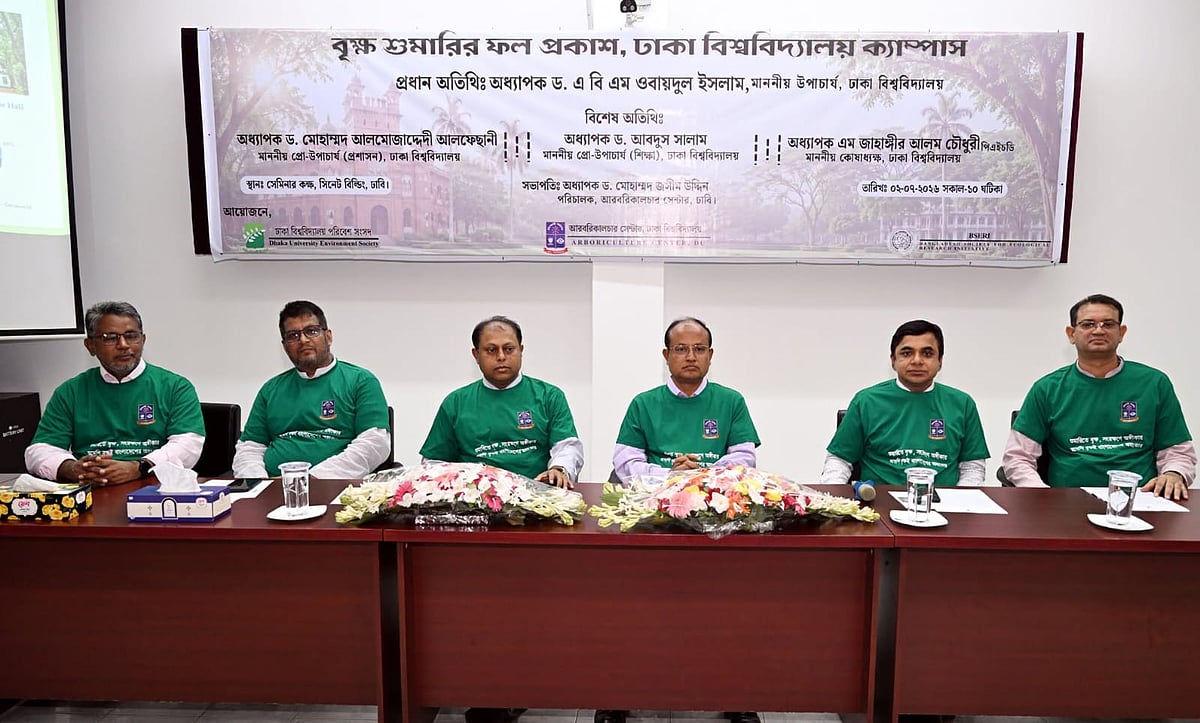
A recent census conducted on the Dhaka University campus has revealed the presence of 17,161 trees belonging to 277 different species. The study categorized the trees based on their primary function and contribution to the ecosystem. Among the findings, fruit-bearing trees constitute 25% of the total, playing a significant role in food provision. Trees that support wildlife make up 22% of the campus flora, highlighting their importance for biodiversity. Medicinal plants account for 21%, underscoring their potential value. Timber-producing trees represent 20% of the count, while ornamental trees, contributing to the aesthetic appeal of the campus, make up the remaining 12%. This comprehensive survey provides valuable data on the green infrastructure within the university grounds.
The detailed census of Dhaka University's arboreal population offers a quantifiable baseline for the institution's environmental stewardship. Understanding the species distribution—from fruit-bearing and wildlife-supporting to medicinal, timber, and ornamental trees—allows for strategic planning in urban green space management. This data can inform future biodiversity initiatives, ecological resilience strategies, and the educational integration of environmental science. Evaluating the long-term impact of these species compositions against climate change projections and urban development pressures will be crucial for sustainable campus planning over the next decade.
AI-generated to prompt reflection — not editorial opinion, not advice, not a statement of fact. How this works.