Did the 'Hydration Break' Increase Goals in the World Cup?
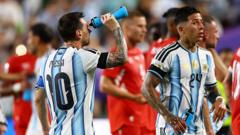
The 2026 World Cup introduced a controversial 'hydration break' rule. Following the implementation of this new regulation, there has been an unusually high number of goals scored in the tournament. The introduction of these breaks has sparked debate regarding their impact on game dynamics and scoring rates. While the exact reasons for the increased goal count are still being analyzed, the timing of the hydration breaks is being closely examined as a potential contributing factor. This development raises questions about how rule changes can influence the flow and outcome of major sporting events. Further statistical analysis will be needed to definitively link the hydration breaks to the elevated scoring.
The introduction of a 'hydration break' in the 2026 World Cup coincides with a notable increase in goal scoring. This suggests a potential correlation that warrants further investigation into how pauses in play, designed for player welfare, might alter game momentum and offensive opportunities. While the rule's intent is physiological, its impact on tactical approaches and defensive structures could indirectly influence scoring frequency. Future analysis should explore whether this trend is a statistical anomaly or a predictable outcome of modified game pacing, considering the evolving dynamics of professional sports under new regulatory frameworks.
AI-generated to prompt reflection — not editorial opinion, not advice, not a statement of fact. How this works.