Dinajpur Bandhusabha Plants Over 2,000 Trees for Environmental Protection
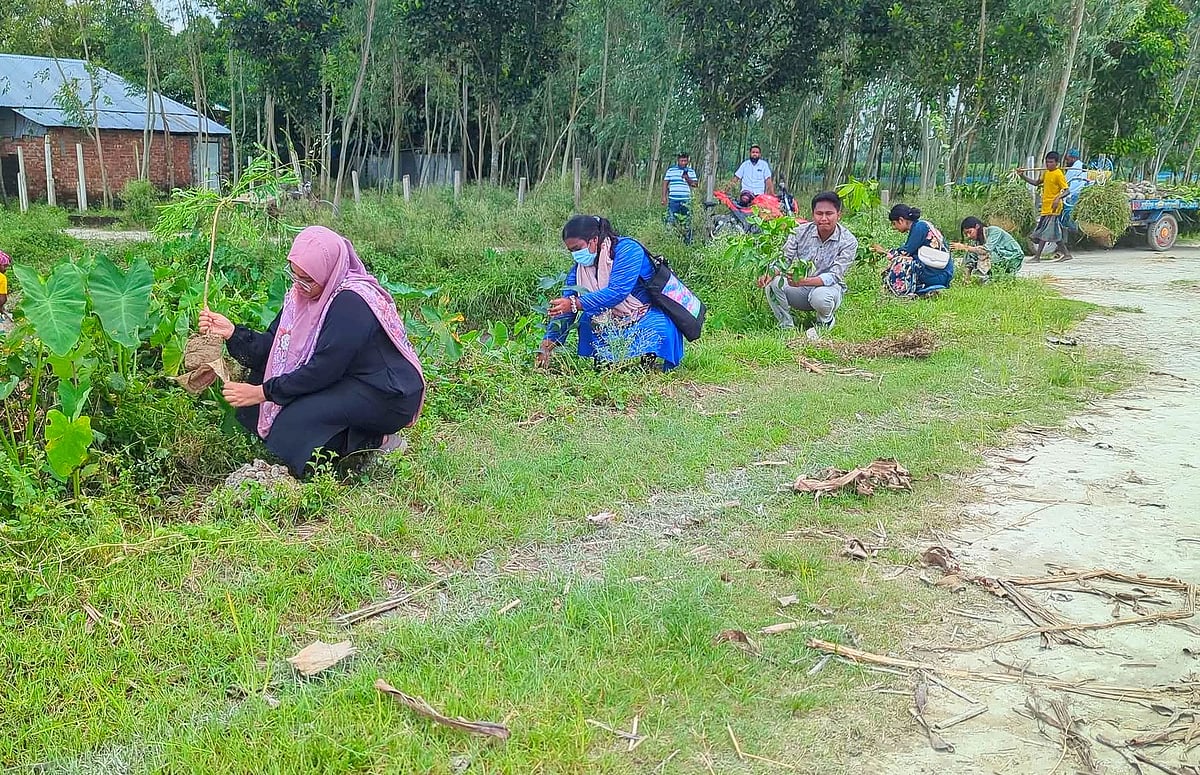
Dinajpur Bandhusabha, an organization dedicated to environmental conservation and combating climate change, has planted and distributed over 2,000 fruit, forest, and medicinal saplings. The initiative, themed 'Planting is not enough, trees must be saved with care,' began on July 16th. The program involved multiple phases across various locations in the Dinajpur district.
In the initial phase, saplings were planted along roadsides and at a local madrasa and orphanage in the Joygonj ferry ghat area of Birganj upazila, with active participation from residents. The second phase focused on instilling environmental awareness in students, with saplings distributed to pupils at Jharbari High School and Jharbari Government Primary School. Students like Sumaiya Akter and Saurav Roy expressed enthusiasm for nurturing their new trees.
The third phase targeted government housing projects (Ashrayan Prakalpa) in Dinajpur Sadar upazila, where saplings were planted and distributed to families, with residents like Yasmin Ara and Jahanara Khatun expressing gratitude. The fourth phase involved greening Chandganj Degree College, with saplings handed to Principal Mofazzal Hossain. The final phase saw saplings distributed among Dinajpur Bandhusabha members, who pledged to plant and care for them. The organization's president, Shabonam Mustarin, emphasized the importance of nurturing each sapling, while General Secretary Biplob Chandra Roy highlighted the program's long-term goals of raising environmental consciousness and motivating youth. Advisor Rajiul Islam affirmed the commitment to continued environmental activities for a greener future.
This initiative by Dinajpur Bandhusabha underscores a grassroots effort to address environmental degradation and climate change impacts through widespread tree planting. The program's multi-pronged approach, engaging students, local communities, and residents of housing projects, demonstrates a strategic understanding of fostering collective responsibility. By distributing saplings and emphasizing ongoing care, the organization moves beyond symbolic gestures to promote tangible environmental stewardship. The focus on educating younger generations and involving vulnerable populations in housing projects highlights a system-level perspective on sustainability, aiming to build long-term resilience and ecological awareness within the community. Future efforts could explore partnerships for monitoring sapling survival rates and scaling successful engagement models.
AI-generated to prompt reflection — not editorial opinion, not advice, not a statement of fact. How this works.