Distinguishing Between a Coup and a Social Outburst
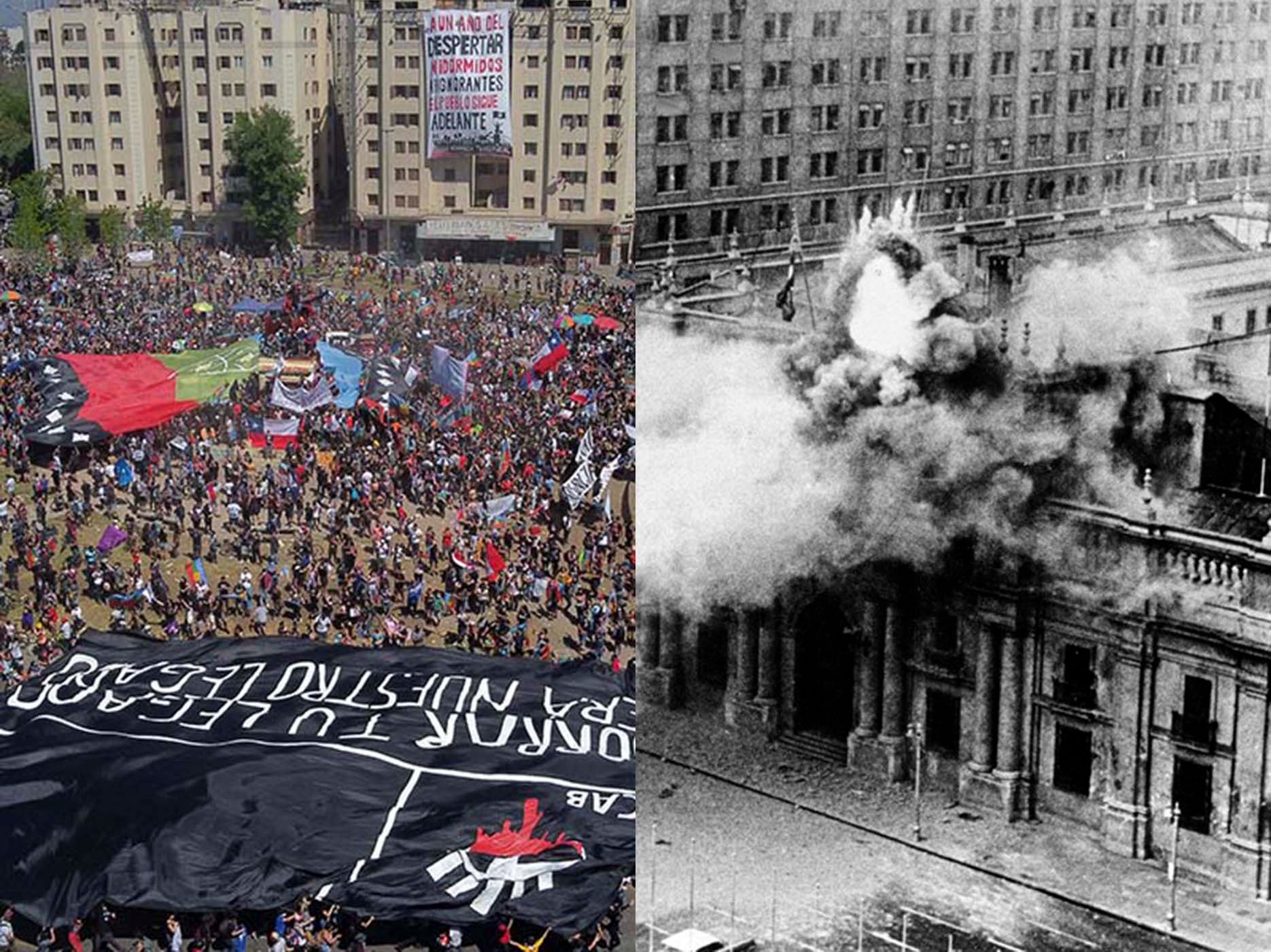
Eugenio Tironi responds to Pablo Ortúzar's critique regarding the logical consistency of his analyses of historical events in Chile. Tironi argues that while the 1973 coup and subsequent dictatorship involved clearly identifiable actors and organizations, such as the CIA, Cuban influence, the far-right, and specific political groups, the 2019 social outburst lacked this clear attribution. He points out that evidence for the coup's agents is overwhelming and well-documented, leading to identifiable perpetrators and human rights violations. In contrast, Tironi states that no equivalent evidence exists for the 2019 outburst. He recalls President Piñera's vague references to a powerful enemy without identification, and mentions speculative attributions to Cuban, Chavista, or anarchist groups, but notes the absence of individualized responsible parties, judicial processes, or convictions. Tironi refutes Ortúzar's suggestion that the outburst was caused by the destructive actions of the 'new left' or the capitulation of the center-left. He differentiates between attempting to interpret and politically capitalize on an event and actually triggering it, noting that when political leaders tried to join the 2019 marches, they were often expelled. Tironi reiterates the fundamental question of why Chile's modernization led to such radical challenges, emphasizing that inventing unsubstantiated agents does not help answer this persistent enigma.
This exchange highlights the critical distinction between events with clearly defined perpetrators and those arising from complex, diffuse societal pressures. While historical analysis of a coup requires identifying specific political and intelligence actors, understanding a social outburst necessitates examining systemic factors like economic inequality, governance failures, and public trust deficits. Attributing such widespread unrest to a few identifiable agents, as was possible with the 1973 coup, risks oversimplification and ignores the multifaceted drivers of mass mobilization. The challenge for policymakers and analysts alike is to move beyond assigning blame to specific individuals or groups and instead focus on the underlying structural conditions that create fertile ground for widespread discontent. The enduring question of why successful modernization can lead to radical societal challenges remains a key area for future research, particularly in understanding the interplay between economic progress, social equity, and political stability in the digital age.
AI-generated to prompt reflection — not editorial opinion, not advice, not a statement of fact. How this works.