Doctor Moved by Children's Farewell Tribute in Rural Brazil
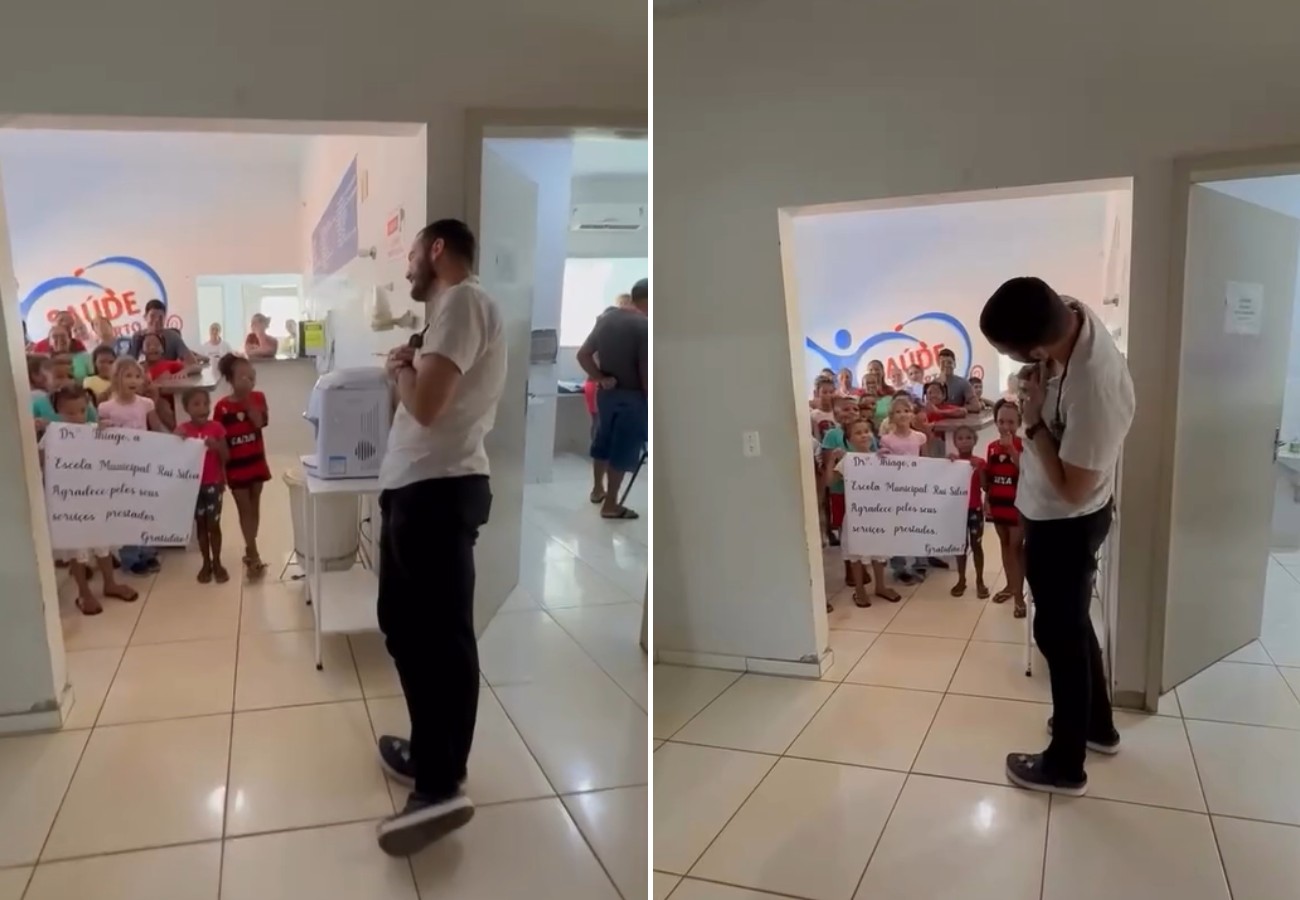
Dr. Thiago de Moura Arruda was deeply touched by a farewell celebration organized by children and teachers in the rural community of Lagoa do Romão, Peixe, in Brazil's Tocantins state. After four years serving the community, Dr. Arruda left his post in April to pursue new career opportunities in an urban health unit within the same municipality. The children, students from the local rural school, sang songs and presented handmade posters to express their gratitude for his work. Dr. Arruda described the experience of leaving as akin to a child moving away from home, feeling profound sadness and nostalgia for the bonds formed. He maintains contact with some former patients through messages and occasional encounters, finding solace in the enduring connections. Initially, he hesitated to revisit Lagoa do Romão due to his sentimental nature and the potential emotional impact. His new role in the urban area presents different challenges, exposing him to more overt social inequalities compared to the more concealed disparities in the rural setting, which he noted was mitigated by strong community unity. Dr. Arruda emphasized that the true quality of life in Lagoa do Romão stemmed from the love and unity among its residents, which he felt was a nurturing environment for his own aspirations. The unexpected tribute, which occurred during a regular workday, involved dozens of children and teachers gathering outside his clinic, making it a defining moment in his professional life. He highlighted the significance of family medicine in fostering patient relationships.
This event highlights the profound impact of primary care physicians in underserved rural communities, demonstrating how strong interpersonal relationships can foster a sense of belonging and emotional reciprocity that transcends formal healthcare structures. The doctor's emotional response and the community's organized tribute underscore the value placed on consistent, compassionate care, particularly when it is scarce. The narrative also implicitly contrasts the social dynamics of rural versus urban settings, suggesting that while urban environments may offer more resources, they can also present starker social inequalities and potentially weaker community cohesion. Future healthcare policy could explore models that incentivize long-term commitment of medical professionals to rural areas, recognizing the systemic benefits of continuity of care and community integration beyond mere service provision.
AI-generated to prompt reflection — not editorial opinion, not advice, not a statement of fact. How this works.