Doctor Wept for Weeks After Heartfelt Farewell from Children in Rural Clinic
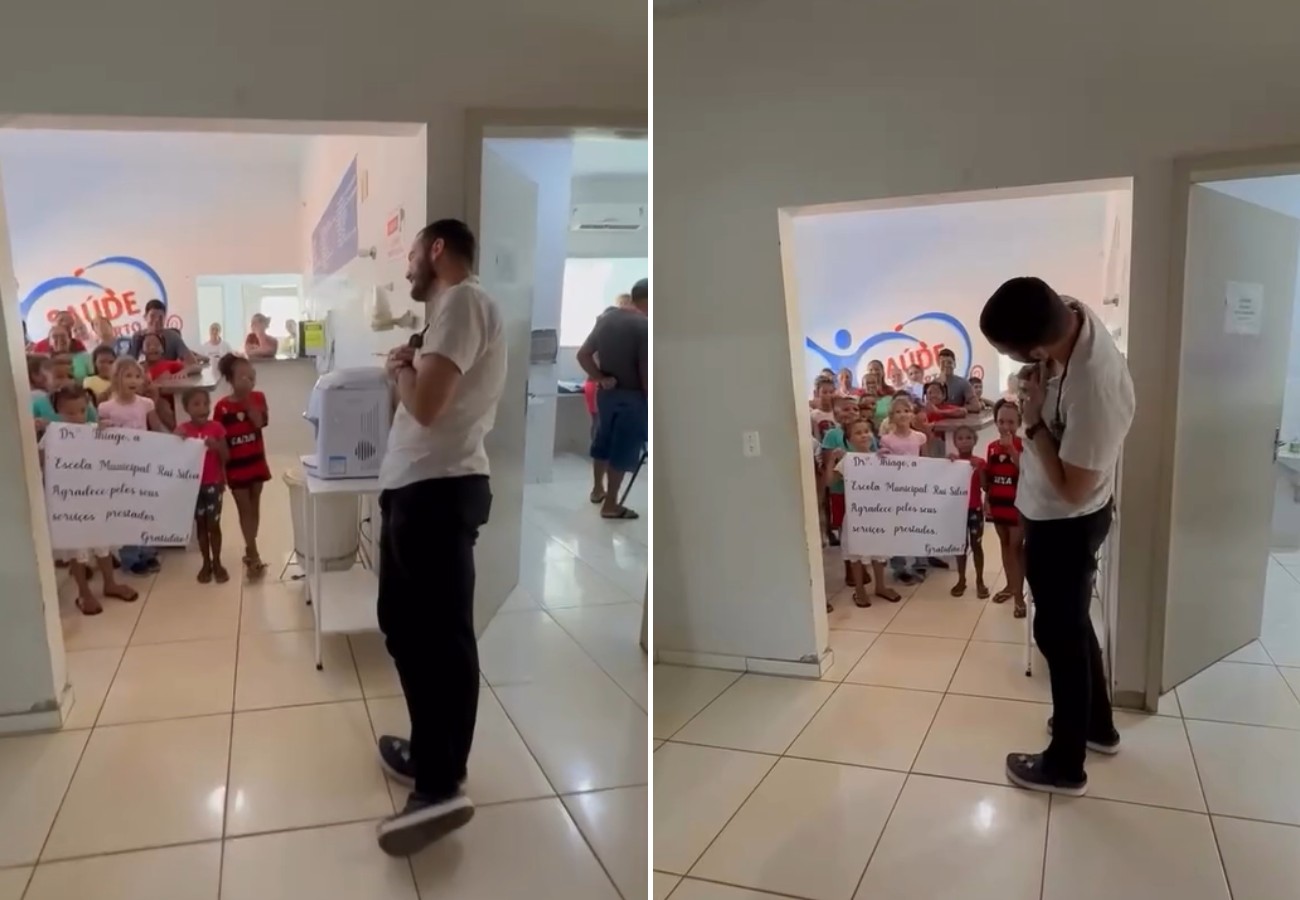
Dr. Thiago de Moura Arruda was deeply moved by a surprise farewell tribute from children at a rural health post in Peixe, Tocantins, Brazil, where he had worked for four years. After leaving the Lagoa do Romão community to advance his career, he found the separation profoundly difficult, comparing it to a child leaving their hometown for new opportunities. He confessed to weeping for weeks due to the saudade, or longing, for the community he had come to love.
The touching send-off involved students from the local rural school gathering at the health unit to sing a song and present him with handmade posters. This event gained significant attention after being captured on video. Dr. Arruda had dedicated four years to serving the residents of Lagoa do Romão, conducting home visits and engaging in school activities. Despite moving to an urban health unit within the same municipality, he maintains contact with many former patients, finding continued connection and a sense of belonging.
He admitted he has not yet returned to the community, fearing his emotions would be too overwhelming. His new role in Peixe's urban area presents different challenges, exposing him to more overt social inequalities compared to the more masked disparities in the rural setting, which were softened by community unity. However, Dr. Arruda believes the most valuable lesson from Lagoa do Romão was not about healthcare infrastructure but the profound love and unity among its residents, which he found to be a nurturing environment for his dreams.
This event highlights the profound impact of community-focused healthcare professionals and the deep bonds that can form in underserved areas. The emotional farewell underscores the critical role of primary care physicians in fostering trust and belonging, often serving as pillars within small communities. While the doctor's personal experience is moving, it also implicitly points to systemic challenges in retaining medical talent in rural settings, suggesting a need for policies that incentivize long-term commitment beyond the professional rewards. The contrast between rural and urban healthcare experiences also raises questions about equitable resource distribution and the social determinants of health across different environments.
AI-generated to prompt reflection — not editorial opinion, not advice, not a statement of fact. How this works.