Documentary 'July Diaries' Showcases People's Perspective on July Uprising
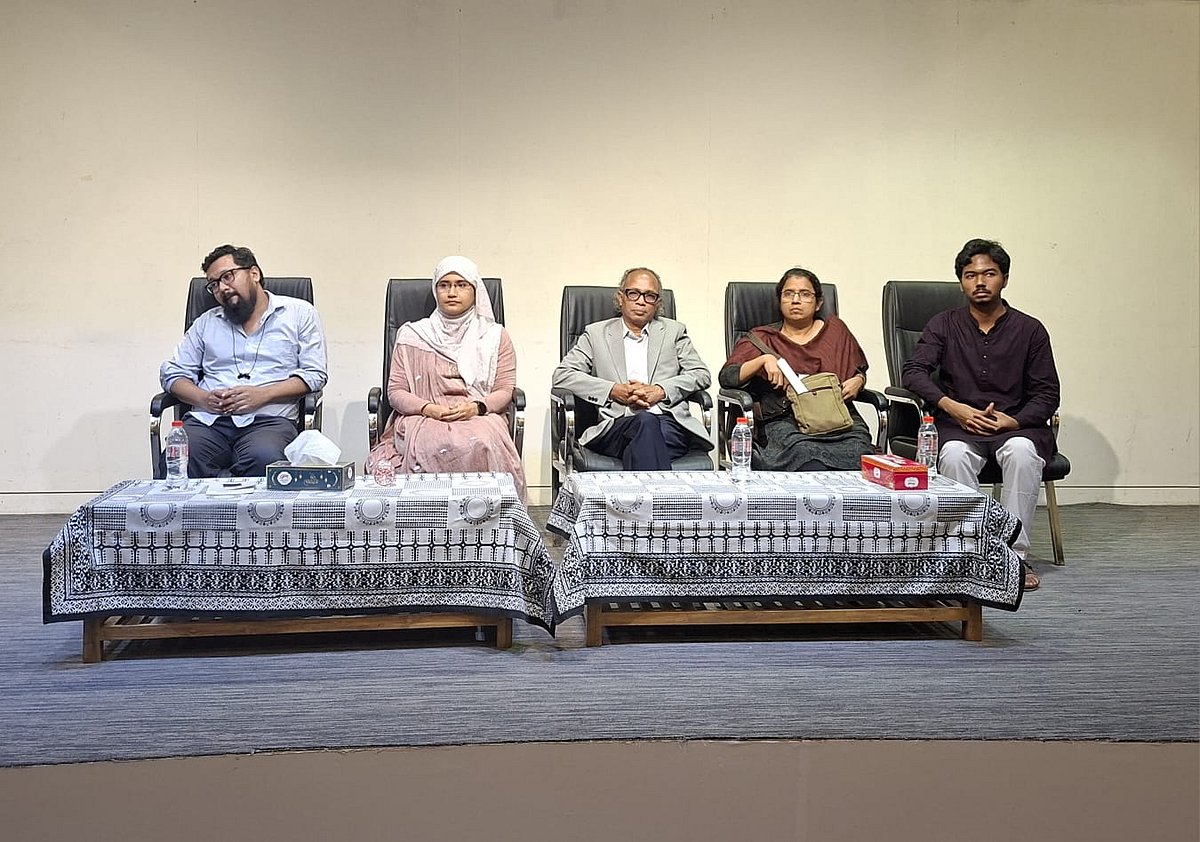
A documentary titled 'July Diaries,' created by students from the University of Chittagong, was screened at the National Museum in Dhaka on Sunday evening. The film aims to preserve the history of the July mass uprising by highlighting the personal experiences and perspectives of ordinary people, rather than focusing solely on political leaders. The documentary, which is one hour long, features the stories of sacrifice and participation from common citizens, apolitical youth, and laborers involved in the movement. The production cost over 150,000 Bangladeshi Taka, with approximately 130,000 Taka raised through crowdfunding.
Speakers at the event emphasized the importance of documenting these multifaceted experiences for future generations. Nurul Kabir, editor of the English daily New Age, stated that such documentaries are crucial for preserving memories of mass uprisings and resisting oblivion, reflecting both historical preservation and public participation. Taslima Akhter, president of the Bangladesh Garment Workers' Solidarity and former member of the Labour Reforms Commission, praised the initiative, underscoring that the uprising's history is also one of participation by laborers, who suffered the most casualties.
Samantha Sharmin, joint convenor of the National Citizen Party (NCP), noted that a richer historical understanding emerges from diverse personal accounts. She also highlighted that crowdfunded art is accountable to the public, not private donors. Likhon Dutta, a third-year English literature student at the University of Chittagong and the film's director, explained that 'July Diaries' was made to record the July uprising's history from the viewpoint of ordinary people, capturing the varied experiences surrounding the event.
The creation and public screening of 'July Diaries' represent a significant effort to democratize historical narratives, moving beyond elite-centric accounts of political events. By utilizing crowdfunding, the project sidesteps traditional funding gatekeepers, potentially fostering greater artistic independence and direct public accountability. This approach highlights a growing trend where citizens leverage digital platforms to document and disseminate their own histories, challenging established memory-making institutions. The emphasis on spontaneous public participation and diverse individual experiences, while valuable for a comprehensive understanding, also implicitly raises questions about the long-term sustainability of social movements without organized political structures, a point acknowledged by speakers. The initiative underscores the evolving landscape of historical documentation in the digital age, where technology empowers grassroots actors to shape collective memory and challenge official or dominant historical interpretations.
AI-generated to prompt reflection — not editorial opinion, not advice, not a statement of fact. How this works.