Documentary Reveals Preta Gil's Hospital Room Became a Celebrity Hub During Cancer Treatment
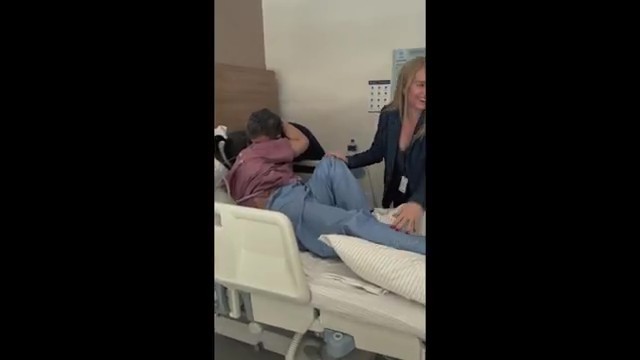
A new documentary, "Preta, Eu Não Ando Só," chronicles the intense support network surrounding Brazilian singer Preta Gil during her cancer treatment. The film, compiled from over two years of footage filmed by Gil and her close friends, highlights how her hospital room became a vibrant gathering place for family and fellow artists. Celebrities like Luciano Huck, Angélica, and Ivete Sangalo are featured, sharing their experiences and emphasizing the strength of their friendships with Gil. Huck described Gil's unique ability to foster a chosen family, uniting diverse groups of people. Sangalo stated that friendship was a crucial pillar of support throughout the treatment, more so than any other relationship. The constant stream of visitors was so significant that hospital staff nicknamed her room "Preta Gil's VIP Box" due to its lively atmosphere, which contrasted with a typical hospital setting. Despite visitor limitations, dozens of friends would visit daily, filling the room with conversations, laughter, and affection, underscoring Gil's renowned talent for cultivating relationships. Gil herself initiated the filming process after her intestinal cancer diagnosis in 2023, encouraging loved ones to document her journey from diagnosis and surgery to recovery and daily life, aiming to share her experience and promote broader discussions about the disease.
This documentary offers a powerful perspective on the role of social support during serious illness, framing Preta Gil's hospital stay not just as a medical battle but as a testament to enduring friendships. The narrative highlights the human capacity for connection and mutual aid, even within the clinical environment of a hospital. By focusing on the positive interactions and the "chosen family" that rallied around Gil, the film implicitly underscores the importance of robust social networks for patient well-being. In an era increasingly shaped by digital interaction, this story serves as a reminder of the profound impact of in-person relationships and community support. It prompts reflection on how healthcare systems and societal structures can better facilitate and acknowledge the vital role of social connection in healing and recovery, moving beyond purely clinical metrics to embrace holistic patient care.
AI-generated to prompt reflection — not editorial opinion, not advice, not a statement of fact. How this works.