Dollar Rises Amidst US-Iran Tensions and Trade Tariff Concerns
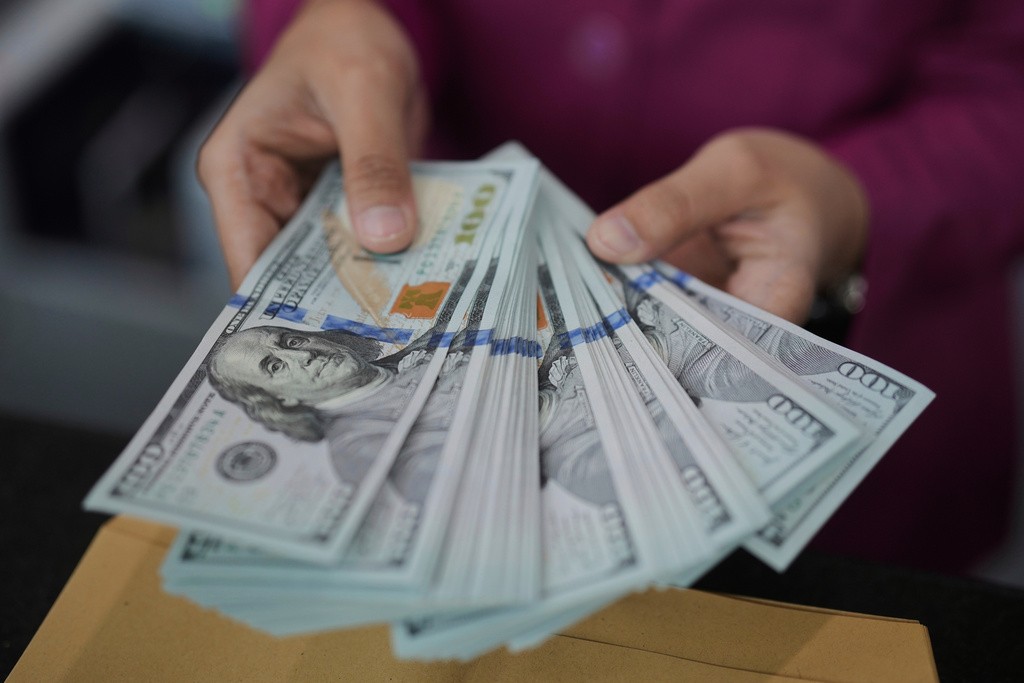
The US dollar opened higher on Monday, rising 0.21% to R$ 5.1198, as investors closely monitored escalating tensions in the Middle East. The primary driver of this market movement is the renewed conflict between the United States and Iran, which has prompted Tehran to reimpose restrictions on the Strait of Hormuz. This critical shipping lane, responsible for approximately 20% of global oil trade, has seen oil prices surge in response. Brent crude futures rose 3.26% to $78.49 per barrel, while US West Texas Intermediate (WTI) climbed 3.32% to $73.78 per barrel.
Adding to market uncertainty are ongoing trade negotiations between Brazil and the United States. The US is considering imposing tariffs of 25% and 12.5% on Brazilian goods, with a decision expected by Wednesday, the 15th. Reports indicate a lack of progress in reaching an agreement, with US Trade Representative Jamieson Greer suggesting significant distance remains between the two nations. This situation, coupled with domestic economic data such as retail sales and service volume figures for May, and the Central Bank of Brazil's IBC-Br index, is shaping investor sentiment.
In domestic economic news, Brazil's official inflation rate, the IPCA, showed a slowdown in June, rising by 0.16%. This figure was below market expectations and represented a decrease from May's 0.58% increase. The accumulated inflation for 2026 reached 3.36%, and the 12-month rate decreased to 4.64% from 4.72%. Global stock markets experienced mixed performance, with US indices showing gains while European markets were largely flat and Asian markets displayed a more positive trend, particularly influenced by Chinese internet companies.
Geopolitical instability, exemplified by the US-Iran conflict and its impact on oil supply routes, creates significant currency and commodity market volatility. Simultaneously, the looming threat of US trade tariffs on Brazilian goods introduces another layer of economic uncertainty, potentially affecting trade balances and investment flows. Investors are navigating a complex landscape where international relations and trade policy directly influence financial markets. The interplay between these global events and Brazil's domestic economic indicators, such as inflation and economic activity, highlights the interconnectedness of the modern global economy and the challenges policymakers face in managing external shocks while fostering domestic stability and growth.
AI-generated to prompt reflection — not editorial opinion, not advice, not a statement of fact. How this works.