Dolly the Sheep: 30 Years Since the Birth That Revolutionized Science
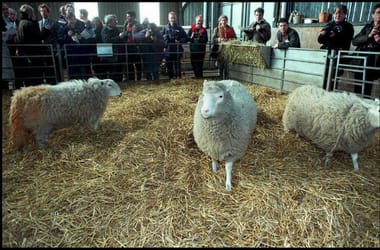
Thirty years ago, the world's first cloned mammal was born in Scotland, marking a pivotal moment in scientific history. The creature, identified by the code 6LL3, was the result of extensive research, with scientists undertaking two hundred and seventy-seven unsuccessful attempts before achieving this breakthrough. This achievement, the birth of Dolly the sheep, fundamentally altered the landscape of biological and genetic research, opening up new avenues for understanding and manipulating life at its most basic level. The implications of this scientific feat continue to be explored and debated, impacting fields from medicine to agriculture and raising profound ethical questions. Dolly's birth demonstrated the feasibility of cloning mammals, a concept previously confined to theoretical discussions and science fiction. This success spurred further advancements in cloning technology and genetic engineering globally. The scientific community was profoundly shaken by the implications of this development, recognizing its potential to reshape our understanding of reproduction and heredity. The journey to Dolly was arduous, underscoring the persistence and dedication required for groundbreaking scientific discovery. Her existence proved that complex biological processes could be replicated, challenging long-held beliefs about the uniqueness of individual organisms. The legacy of Dolly the sheep extends far beyond her own lifespan, continuing to influence scientific inquiry and public discourse.
The birth of Dolly the sheep 30 years ago represented a significant leap in biotechnology, demonstrating the potential for somatic cell nuclear transfer in mammals. This breakthrough challenged established biological paradigms and opened new frontiers in genetic research, potentially impacting areas like regenerative medicine and livestock breeding. However, the extensive number of failed attempts preceding Dolly's birth highlights the technical challenges and ethical considerations inherent in such advanced reproductive technologies. As we look towards the future, the advancements stemming from Dolly's creation necessitate ongoing public discourse and robust regulatory frameworks to navigate the complex ethical, societal, and scientific implications of genetic manipulation and cloning.
AI-generated to prompt reflection — not editorial opinion, not advice, not a statement of fact. How this works.