Donkey in Unicorn Costume Wins Piauí Competition, Veterinarian Urges Caution
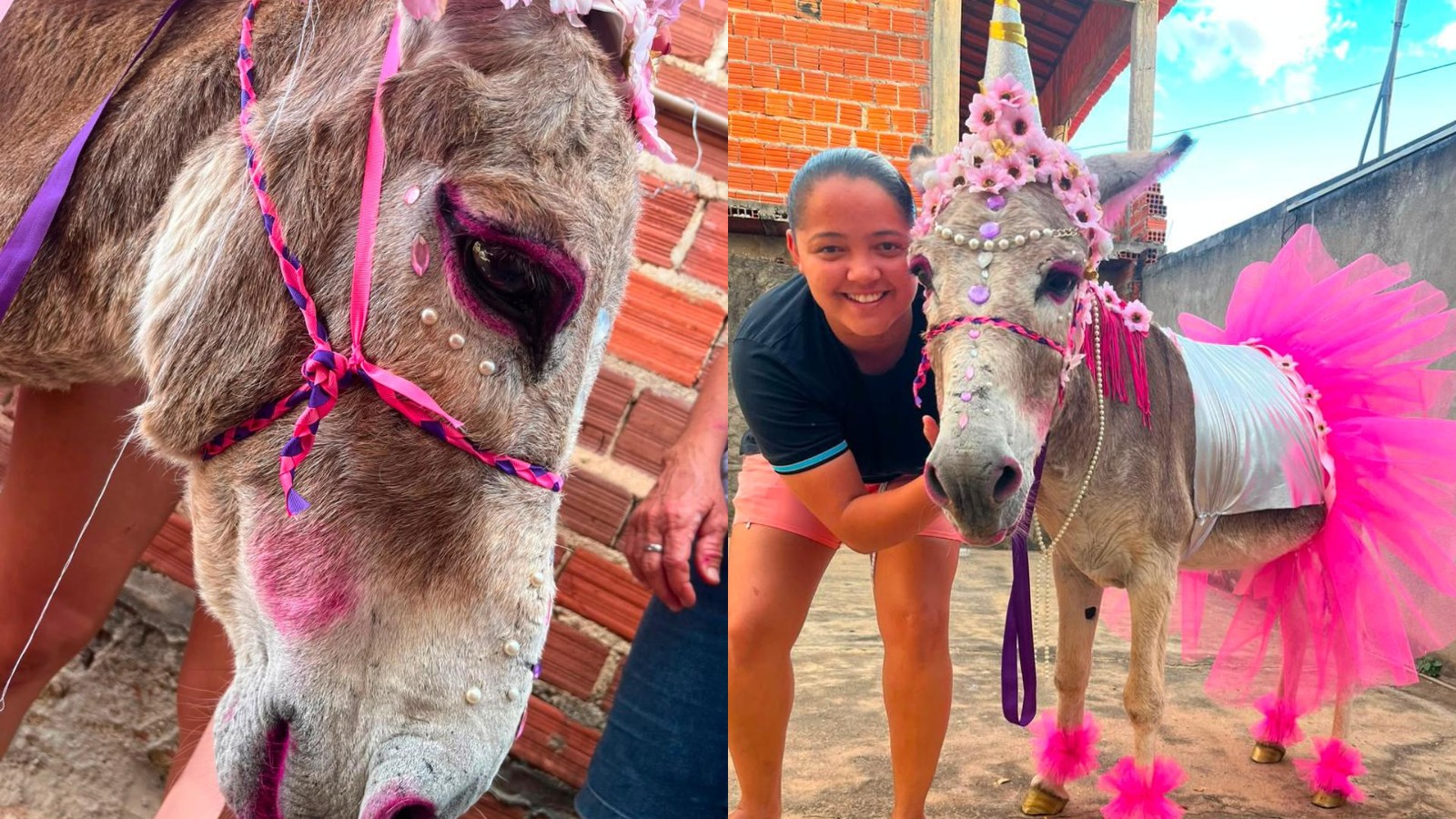
A donkey, affectionately nicknamed 'Jumicórnio,' won first place in a decorated donkey competition held on July 22nd as part of Pimenteiras' anniversary celebrations in Piauí, Brazil. The artisan responsible for the costume, Emely Rossyele, explained that the donkey was adorned with makeup, including lipstick, and decorated with headbands, plastic flowers, and rhinestones. She assured that the animal, belonging to a friend's uncle, remained docile throughout the preparation and was bathed immediately after the competition. The donkey's calm demeanor was noted, contrasting with another agitated animal, as onlookers stopped to take photos. Jumicórnio received a R$300 prize, and the event was part of a cultural revival of traditional town festivities, including sack races and egg-and-spoon races. While the animal's adornment itself is not considered animal cruelty, veterinarian Mônica Arrivabene advised using cosmetics specifically designed for animals or children to minimize allergic reactions. She stated that if appropriate makeup is used and all accessories are removed post-competition, it does not constitute mistreatment. Delegada Francineide Fontes added that a crime would only be considered if the act caused pain, stress, physical suffering, chemical intoxication, or measurable discomfort, which would require a criminal investigation to determine.
This event highlights the intersection of cultural festivities, animal participation, and evolving ethical considerations. While the competition organizers and participants emphasized the animal's docility and the temporary, non-harmful nature of the adornments, the veterinarian's caution underscores a growing societal awareness regarding animal welfare in human-centric activities. The legal perspective further clarifies that intent and demonstrable harm are key factors in defining mistreatment. Moving forward, such events could benefit from clearer guidelines on acceptable practices, prioritizing animal comfort and safety while still allowing for creative expression. The challenge lies in balancing tradition and public engagement with the imperative to prevent potential stress or harm to animals, especially as AI-driven analytics offer new ways to monitor animal well-being in real-time.
AI-generated to prompt reflection — not editorial opinion, not advice, not a statement of fact. How this works.
