Donkeys Fed Gulab Jamun in Bhopal to Appease Monsoon
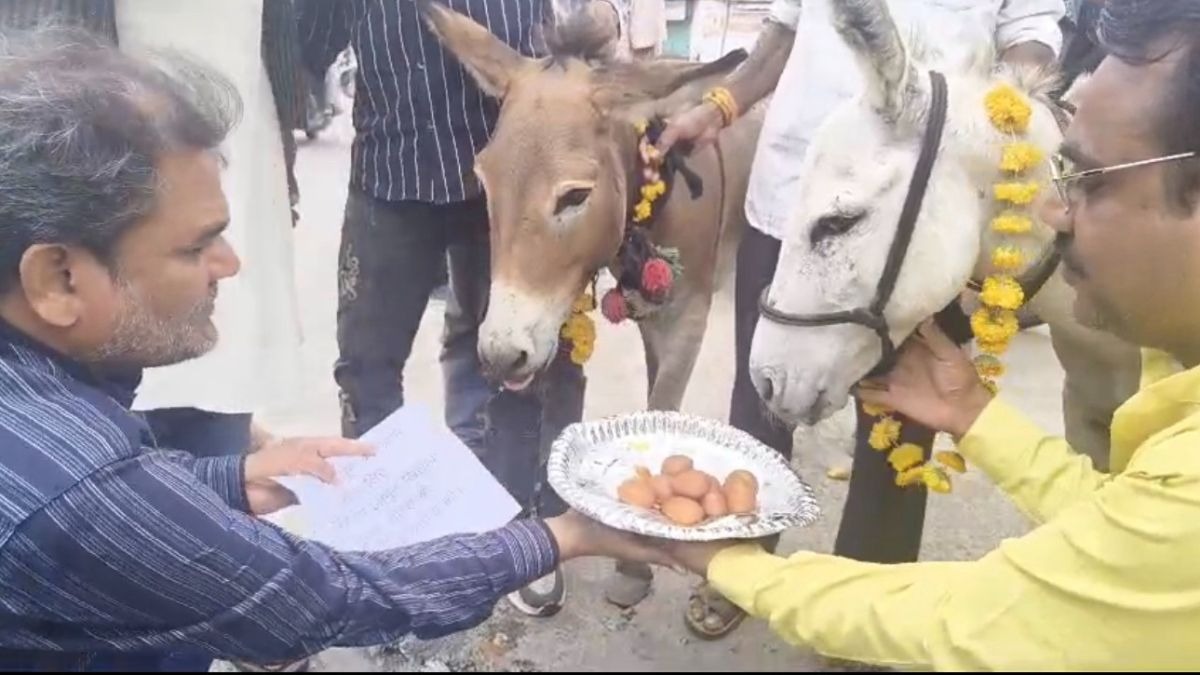
In an unusual event in Bhopal, the capital of Madhya Pradesh, residents offered a unique ritual to encourage the weak monsoon. People fed donkeys gulab jamun, a popular Indian sweet, in an effort to appease the weather gods and ensure good rainfall. This peculiar ceremony quickly gained traction on social media platforms. Observers referred to it as a tradition, while others humorously dubbed it a 'Monsoon Special Gulab Jamun Party'. The act reflects a deep-seated cultural connection to agricultural cycles and a hope for timely and sufficient rains, which are crucial for the region's economy and sustenance.
This event highlights a cultural response to environmental uncertainty, where traditional practices are employed to influence natural phenomena like rainfall. The act of feeding animals, particularly in a symbolic manner, often stems from beliefs about appeasing deities or nature spirits. In the context of a weak monsoon, such rituals underscore the significant dependence on agricultural cycles and the anxiety associated with potential crop failure. The virality on social media further illustrates how modern platforms can amplify and reframe traditional customs, blending them with contemporary humor and commentary. This situation prompts reflection on the interplay between traditional belief systems, societal anxieties regarding climate, and the evolving ways communities express their hopes and concerns.
AI-generated to prompt reflection — not editorial opinion, not advice, not a statement of fact. How this works.