Dr. Asif Mahmood, Physician of Pakistani Origin, Elected Chair of US Religious Freedom Commission
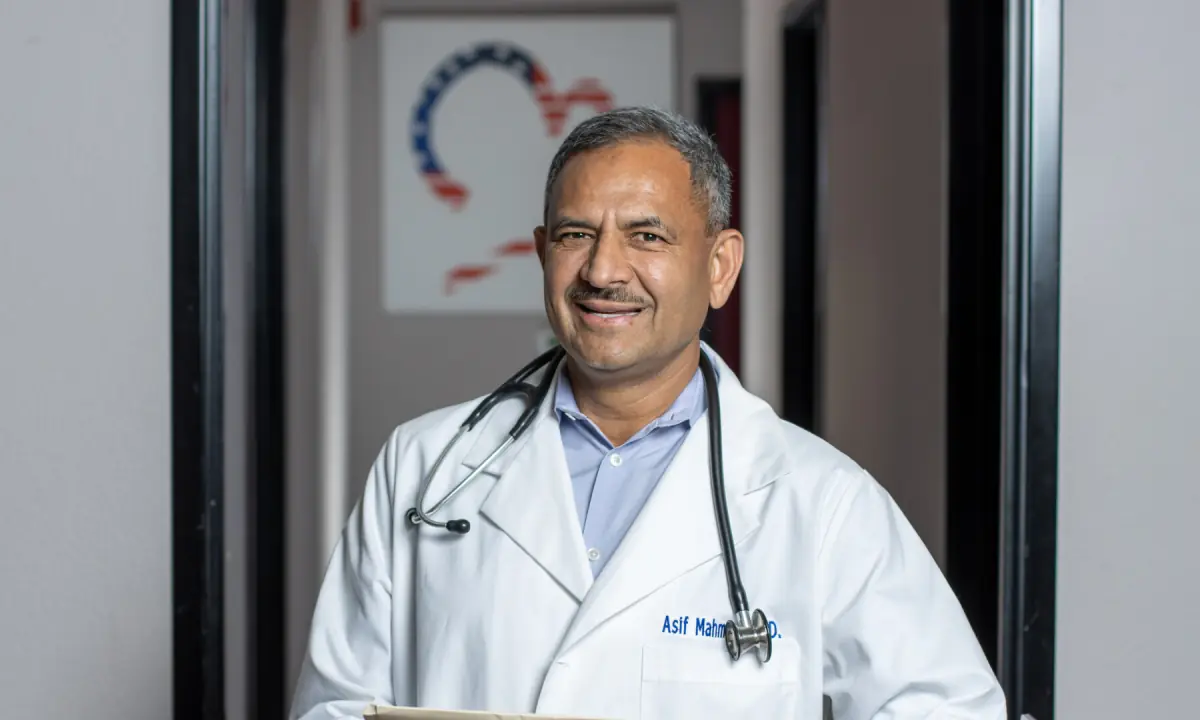
Dr. Asif Mahmood, a physician and advocate of Pakistani origin, has been unanimously elected as the new chair of the United States Commission on International Religious Freedom (USCIRF) for the 2026-27 term. CeCe Heil will serve as the vice chair. USCIRF is a bipartisan federal government body responsible for monitoring global religious freedom and advising the U.S. President, Secretary of State, and Congress on policy recommendations. Dr. Mahmood, a practicing pulmonologist, is recognized for his extensive global advocacy and humanitarian work in crisis-stricken regions, including Kashmir and Tigray. He has also served two terms on the Medical Board of California, championing patients' rights and access to healthcare. Upon his election, Dr. Mahmood emphasized the critical role of USCIRF in analyzing threats and recommending policy solutions to advance religious freedom internationally. He expressed his commitment to defending the rights of all individuals, regardless of their faith or lack thereof, and fostering a world of mutual respect and peaceful coexistence. First appointed to USCIRF in 2024 by House Minority Leader Hakeem Jeffries, Dr. Mahmood previously served as the commission's vice chair. He has resided in California since 1999. The commission recently recommended that the U.S. State Department designate India as a "country of particular concern" due to its religious freedom conditions and has previously called for sanctions against Pakistani and Indian government entities. Dr. Mahmood has also been involved in efforts to garner U.S. support for former Pakistani Prime Minister Imran Khan.
The election of Dr. Asif Mahmood, a physician with a background in human rights advocacy and humanitarian interventions, to lead the USCIRF signifies a potential shift towards prioritizing on-the-ground impact and patient advocacy within the commission's mandate. His stated commitment to defending the rights of all individuals, including those of no faith, aligns with a broader trend toward inclusivity in human rights discourse. The commission's recent actions, such as recommending the designation of India as a country of particular concern and calling for sanctions against Pakistani and Indian entities, highlight the complex geopolitical landscape in which USCIRF operates. Dr. Mahmood's leadership may navigate these challenges by focusing on systemic issues and evidence-based policy recommendations, aiming to foster international cooperation rather than exacerbating tensions. His experience in advocating for patient rights and healthcare access could inform USCIRF's approach to religious freedom as a fundamental human right intrinsically linked to well-being and dignity.
AI-generated to prompt reflection — not editorial opinion, not advice, not a statement of fact. How this works.