Drainage project collapse creates sinkhole in Natal's West Zone
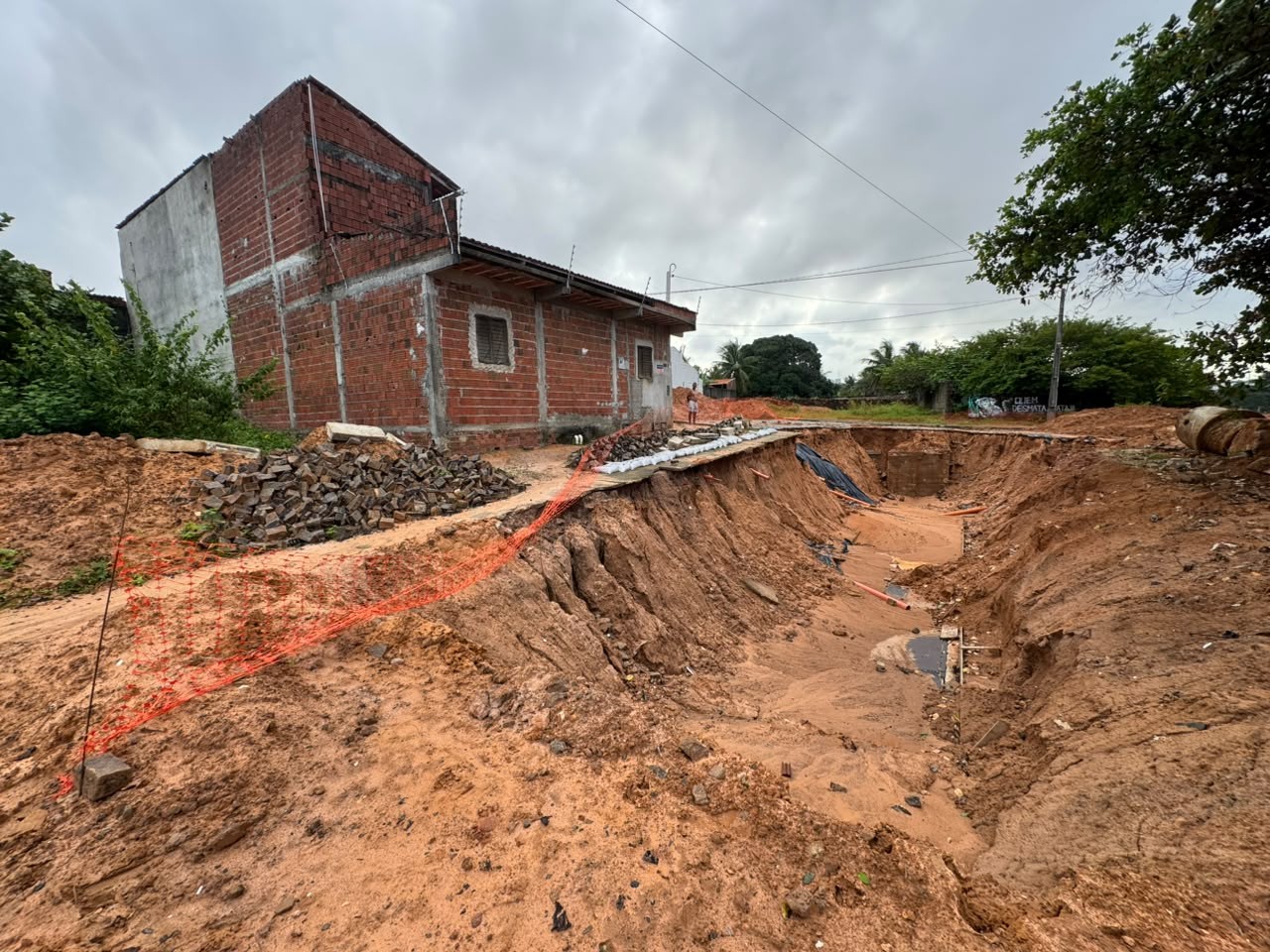
A drainage construction project in the Planalto neighborhood, located in Natal's West Zone, collapsed following heavy rainfall over the past weekend, forming a large sinkhole at the intersection of Maranata and Vicente Martins Fernandes streets. The incident has caused significant concern among local residents, particularly Gilberto Bispo, a retiree living adjacent to the site. Mr. Bispo fears for the stability of his home's sidewalk and the structural integrity of his house should further rainfall occur. The Municipal Secretariat of Infrastructure of Natal (Seinfra) acknowledged that the area is undergoing drainage gallery work and that the recent rains exacerbated the trench. However, the secretariat stated that no major damage resulted. The responsible company is reportedly already working to repair the section, with completion expected within the initially projected 30-day timeframe. Residents reported that the construction began approximately 20 days ago, and a motorcyclist fell into the hole last week, escaping serious injury. To mitigate further risks, the city has deployed sandbags to redirect water, along with protective fencing and cones from the Urban Mobility Secretariat. Construction crews resumed work on Monday, intending to install reinforcement and concrete the gallery, but the soil collapse necessitated prior site clearing.
The collapse of the drainage project in Natal highlights the critical need for robust infrastructure planning and execution, especially in areas prone to heavy rainfall. While the municipal secretariat attributes the incident to increased water volume, the premature failure of the construction suggests potential issues with soil stability assessments or construction methods. The prompt repair efforts and the implementation of safety measures like sandbags and cones demonstrate a reactive approach to mitigate immediate risks. Moving forward, a more proactive strategy involving enhanced geological surveys, real-time monitoring of construction sites during adverse weather, and stringent quality control protocols could prevent such occurrences. This event underscores the systemic challenge of ensuring infrastructure resilience in the face of accelerating climate change impacts, demanding a long-term vision for urban development that prioritizes durability and safety over expediency.
AI-generated to prompt reflection — not editorial opinion, not advice, not a statement of fact. How this works.