Driver with prior fatal crash arrested for killing police sergeant in São Paulo
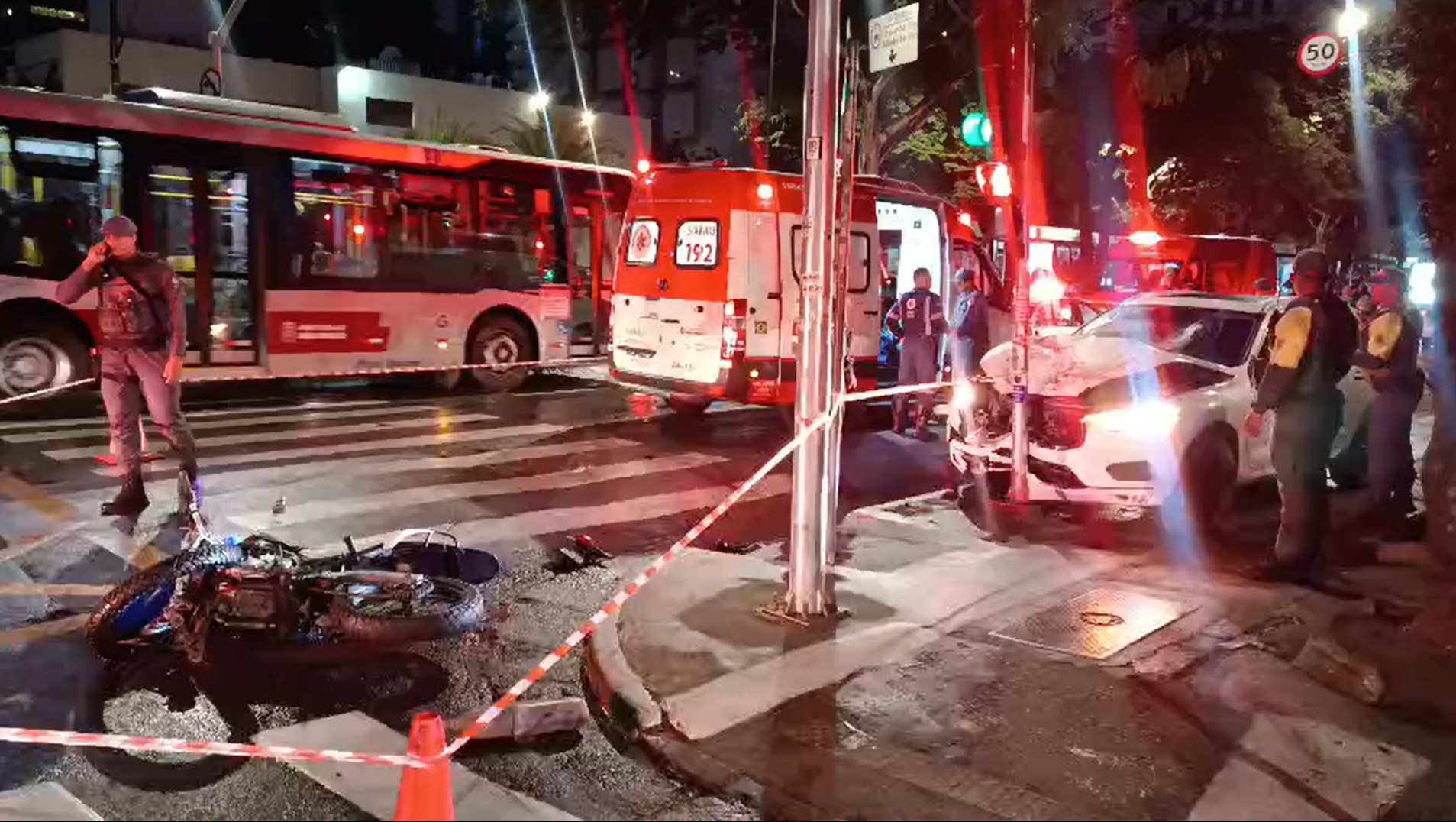
A 22-year-old driver, identified as Bruno Yasuda Sales Shimizu, has been arrested in São Paulo after fatally striking a Military Police sergeant while driving the wrong way on Avenida Nove de Julho. The victim, 50-year-old Sergeant Fábio Ferreira de Souza, was riding his motorcycle when he was hit head-on by Shimizu's vehicle, which was traveling at high speed against traffic. Sergeant Souza was rushed to the Hospital das Clínicas with cardiopulmonary arrest but unfortunately passed away. He was a 26-year veteran of the force, nearing retirement, and was attached to the 2nd Shock Battalion, though on leave at the time of the incident. He was married with two children.
This is not the first fatal incident involving Shimizu. In September 2020, at the age of 16, he was involved in another fatal accident on Rodovia José de Carvalho, near Pilar do Sul. Driving without a license and reportedly without authorization, he collided with a motorcycle, killing its rider, 19-year-old Celso Rodrigo Vieira de Sales. At that time, both Shimizu and the victim were unlicensed. That case was treated as a juvenile offense analogous to negligent homicide. In the current incident, Shimizu exhibited signs of intoxication and refused a breathalyzer test. He was arrested on charges of negligent homicide and taken to the 14th Precinct in Pinheiros. Reports indicate that minutes before the crash, Shimizu had spent approximately R$3,000 on alcoholic beverages at a nightclub. His defense team stated that the facts are still under investigation and that he is cooperating with authorities.
This incident highlights critical issues in traffic safety and the justice system's handling of repeat offenders, particularly concerning young drivers. The driver's prior fatal accident at 16, involving unlicensed driving and a subsequent fatal collision, raises questions about the effectiveness of juvenile justice interventions and parental oversight. His alleged intoxication and high-speed, wrong-way driving leading to a second fatality underscore a pattern of dangerous behavior. The system's challenge lies in balancing rehabilitation with public safety, especially when individuals demonstrate a persistent disregard for traffic laws and the lives of others. Future policy considerations might include enhanced monitoring for individuals with prior serious offenses, stricter graduated licensing programs, and more robust enforcement of impaired driving laws, particularly for repeat offenders. The incident also prompts reflection on societal factors contributing to risky behavior, such as alcohol consumption and access to vehicles by unlicensed individuals.
AI-generated to prompt reflection — not editorial opinion, not advice, not a statement of fact. How this works.