Drone captures striking color divide in Santos sea, mirroring famous river phenomenon
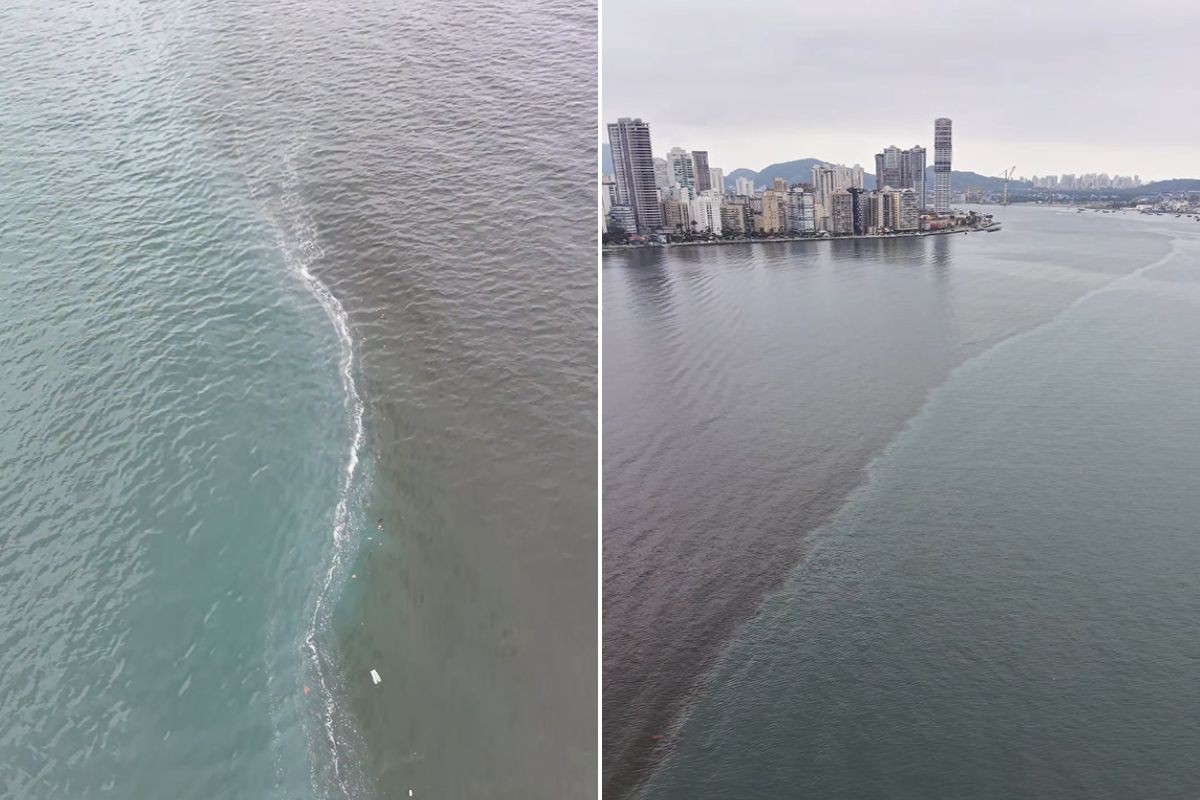
A drone has captured a striking visual phenomenon in the sea off Santos, São Paulo, where a clear boundary divides darker water near the shore from crystalline open ocean. This distinct color change, documented on Tuesday, April 4th, is attributed by the Santos City Hall to the meeting of estuarine water with the open sea. Factors such as differing densities, organic matter concentration, and current actions create this visible demarcation line. The city administration notes that the principle is identical to the "Encontro das Águas" (Meeting of Waters) phenomenon observed between the Negro and Solimões rivers near Manaus, Amazonas. In that famous natural spectacle, two rivers flow side-by-side without mixing, eventually forming the Amazon River. Renan Ribeiro, a coastal hydrodynamics specialist and environmental science doctor from the University of São Paulo (USP), explained that the darker water originates from the estuary, likely via São Vicente or the Santos Port channel. This estuarine water is less dense and less saline but richer in organic matter. Conversely, the waters of Santos Bay are described as more transparent, denser, and saltier, with less organic material. Ribeiro elaborated that the contrast between these waters of different densities causes them to mix slowly, making the boundary particularly noticeable. He also stated that oceanographic conditions, tides, and rainfall can influence this common occurrence. Drone pilot Anderson Coelho, who films daily for the "Aqui TU vê de cima" page, captured the footage near Canal 6 around 4:49 PM on Monday, April 3rd, after noticing the distinct tonal difference along the coastline. While barely perceptible to those on the beach, the drone images have sparked curiosity and discussion among residents and tourists on social media.
This visual event in Santos highlights the complex interplay of estuarine and oceanic water masses, a common hydrological process driven by differences in salinity, density, and organic content. The comparison to the "Meeting of Waters" in Manaus, while illustrative, underscores how distinct fluid dynamics can manifest in various aquatic environments. From a systems perspective, the visibility of this boundary is influenced by a confluence of natural factors including tides, rainfall, and local geography. Understanding these dynamics is crucial for coastal management, potentially impacting everything from marine ecosystem health to navigation and water quality. Future analysis could explore how climate change and increased urbanization might alter the frequency and intensity of such visible stratification events, and their broader ecological implications over the next decade.
AI-generated to prompt reflection — not editorial opinion, not advice, not a statement of fact. How this works.
