Drone footage reveals blast damage inside Japanese mall after earthquake
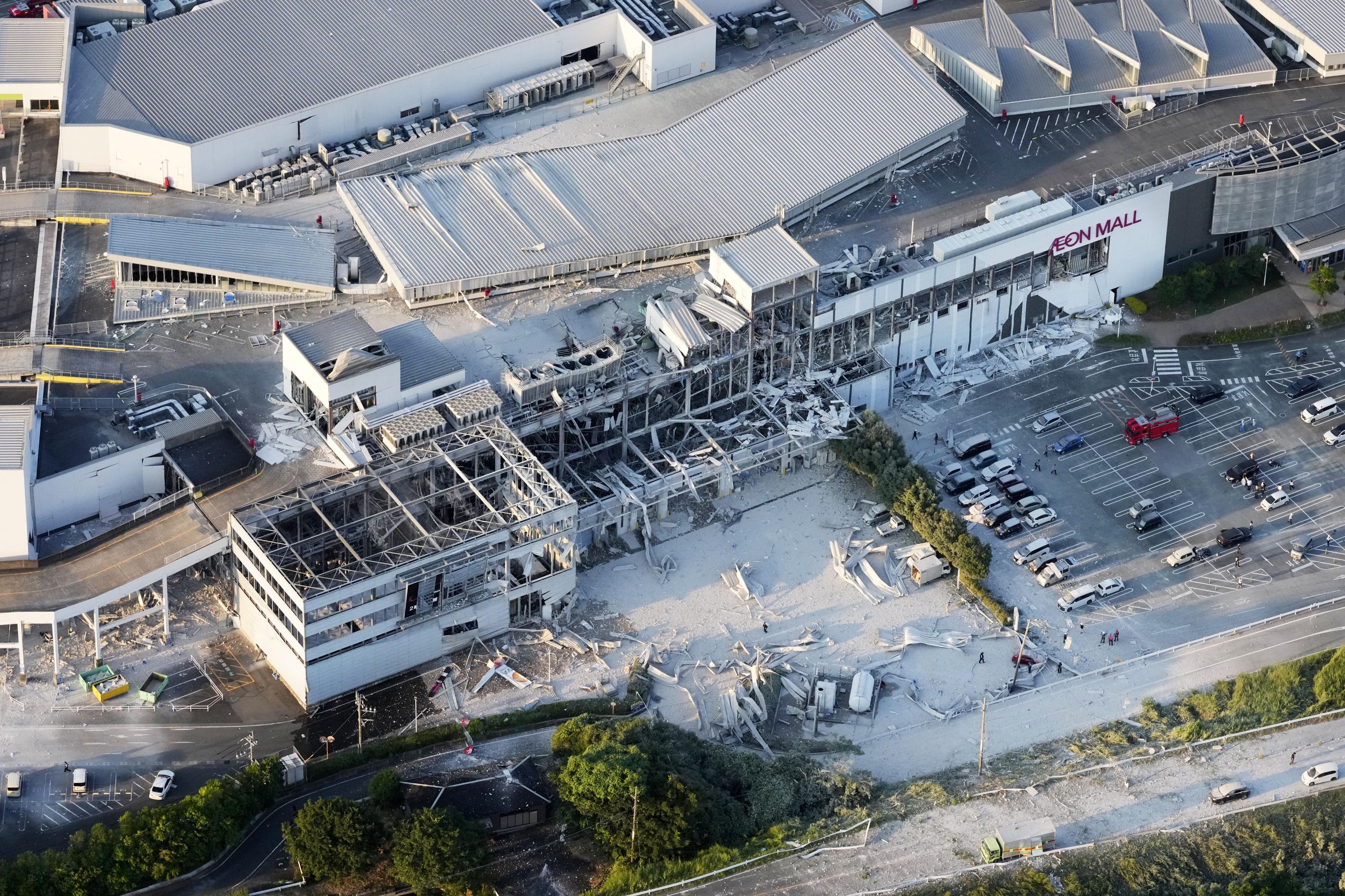
A magnitude 7.1 earthquake struck Kumamoto province in southern Japan on Wednesday, July 28, 2026, resulting in at least 13 fatalities and seven individuals still missing. Rescue teams are in their second day of searching for victims. A primary focus of these operations is the Aeon Mall in Kashima city, where a portion of the second floor collapsed during the earthquake, followed by an explosion that damaged the structure. Authorities are investigating a potential gas leak as the cause of the explosion. An employee reported smelling gas upon returning to the store after customers had left, while a merchant described hearing a "bomb-like" explosion about an hour after evacuating due to the earthquake. Aerial images show the damaged Aeon Mall. Reports indicate people are trapped in collapsed homes in the region. In Kagoshima, at least 30 people were injured, with one hospital receiving approximately 40 injured individuals and another taking in 50 more. Firefighters, police, and Self-Defense Forces personnel searched the mall overnight, prioritizing areas where distress calls were received. The earthquake also caused damage to roads, bridges, and buildings, along with fires and power outages in some areas. Approximately 300,000 people were advised to evacuate their homes and seek shelter. Aftershocks continue to be recorded, and the Japan Meteorological Agency warns of potential strong tremors and landslides in the coming days. No irregularities were reported at regional nuclear power plants.
The earthquake and subsequent explosion at the Aeon Mall highlight the critical importance of robust infrastructure resilience and emergency response protocols in seismically active regions. The investigation into a potential gas leak underscores systemic vulnerabilities in building safety standards, particularly concerning the integration of utilities within large commercial structures. Future urban planning must prioritize advanced seismic retrofitting and fail-safe mechanisms for gas lines to mitigate cascading failures. The widespread evacuations and infrastructure damage also point to the need for continuous investment in early warning systems and public preparedness campaigns to reduce casualties and economic disruption from natural disasters. The event serves as a case study for evaluating the effectiveness of disaster management frameworks in the face of increasingly unpredictable environmental challenges.
AI-generated to prompt reflection — not editorial opinion, not advice, not a statement of fact. How this works.