Drone Navigation Systems Undergoing Rapid Development Amidst Battlefield Jamming Threats
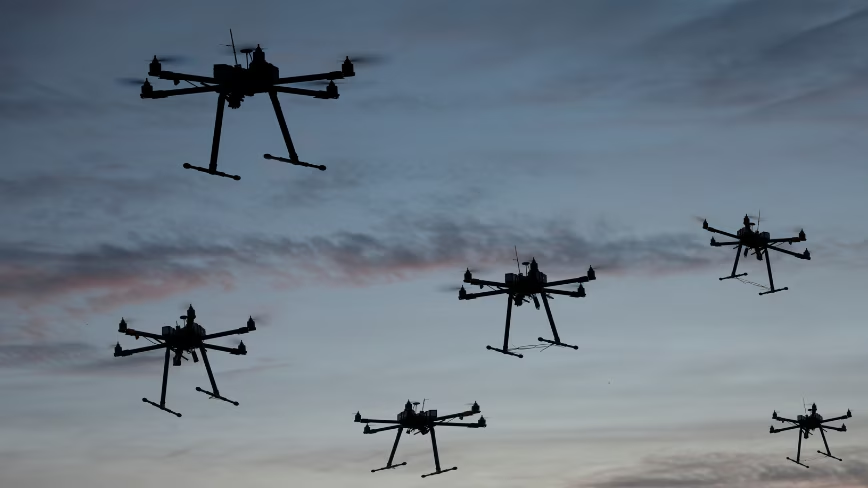
The ongoing conflict in Ukraine has highlighted significant vulnerabilities in drone technology, particularly concerning navigation systems. Standard battlefield countermeasures like GPS spoofing and jamming are effectively disrupting drone-operator communication and rendering guided munitions unreliable. For instance, US-made Excalibur artillery shells, once successful, have seen reduced use due to their susceptible GPS guidance systems. Even physical control methods, such as fiber-optic wires, are being countered by tactics like entangling lines strung across fields. This situation is driving an urgent race among drone manufacturers to develop more resilient navigation technologies that can withstand electronic warfare environments. The focus is on creating systems that are less reliant on traditional GPS signals, which are easily compromised in contested airspace. This innovation is crucial for maintaining the effectiveness of unmanned aerial vehicles and associated weaponry in modern warfare scenarios where electronic countermeasures are prevalent.
The widespread deployment of GPS jamming and spoofing in contemporary conflicts underscores a critical vulnerability in current drone and precision-guided munition architectures. This reliance on vulnerable satellite navigation systems creates an inherent strategic disadvantage when facing adversaries adept at electronic warfare. The market is now incentivized to accelerate research and development into alternative navigation solutions, such as inertial navigation systems, visual odometry, or multi-sensor fusion, to ensure operational continuity. Over the next decade, the integration of AI-powered navigation that can adapt to dynamic jamming environments will likely become a standard requirement, shifting the technological arms race towards more robust and adaptable systems. This evolution reflects a broader trend of increasing battlefield complexity and the imperative for autonomous systems to maintain reliable functionality amidst sophisticated countermeasures.
AI-generated to prompt reflection — not editorial opinion, not advice, not a statement of fact. How this works.