Drones Revolutionize Warfare, Shifting Global Power Dynamics
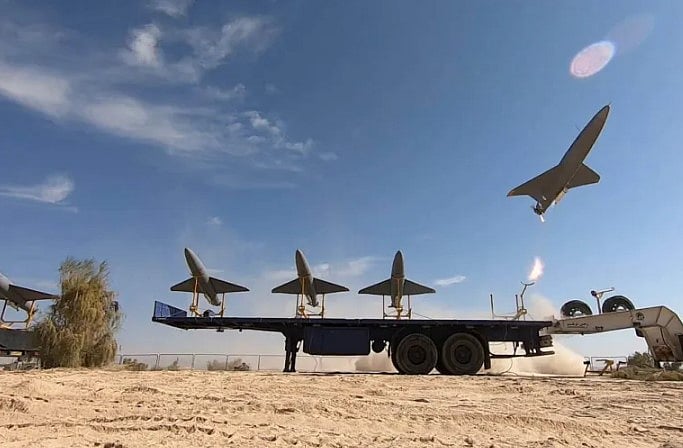
Recent surveys indicate a significant shift in public perception following a recent conflict, with 90% of Israelis believing Iran won and 78% of Americans favoring a ceasefire. Globally, Iran is seen as victorious in the 100-day aerial engagement. This outcome, once unthinkable, has led Gulf states, historically viewing Iran as a security threat since 1979, to express interest in rebuilding Iran's economy and establishing regional security cooperation. This unexpected result in international relations is attributed to Iran's effective use of drone and missile technology, particularly its blockade of the Strait of Hormuz. Military experts identify drones and missiles as key drivers of a 'revolution in military affairs' (RMA), a concept describing profound and rapid transformations in warfare methods, technology, and strategy that grant early adopters significant advantages. Such technological shifts have historically reshaped international balances, from the Bronze Age chariots to Genghis Khan's cavalry and Babur's artillery. The current RMA is propelled by affordable, long-range 'suicide drones' costing around $20,000, capable of striking targets up to 2,000 miles away with 50kg of explosives. These drones fly low, evading radar, and utilize common engines and readily available GPS receivers. Their low cost and the high expense of intercepting them, coupled with the diminishing supply of anti-missile systems for adversaries, create a significant tactical advantage. Russia, Ukraine, and Iran are producing hundreds of these drones daily, with Ukraine employing its own 'Bober' drones against Russian targets. Another revolutionary weapon is the 'First-Person View' (FPV) drone, which uses thin fiber optic cables for direct control, enabling precise strikes despite a limited range of 20 kilometers and making them difficult to jam. These FPV drones have caused significant casualties on the Ukrainian front lines, impacting battlefield momentum.
The proliferation of low-cost, high-impact drone technology, as exemplified in recent conflicts, signifies a profound shift in military capabilities, potentially democratizing asymmetric warfare. The economic calculus of drone deployment versus traditional missile defense highlights a critical vulnerability in established military spending paradigms. This technological evolution challenges the strategic dominance of nations reliant on expensive, complex defense systems, suggesting a future where agility and adaptability may outweigh sheer firepower. The accessibility of advanced drone components, driven by commercial sector innovation, lowers the barrier to entry for state and non-state actors, demanding a reevaluation of global security architectures and arms control frameworks in the coming decade.
AI-generated to prompt reflection — not editorial opinion, not advice, not a statement of fact. How this works.