Drought Reveals 'Edersee Atlantis' Villages Submerged in 1913
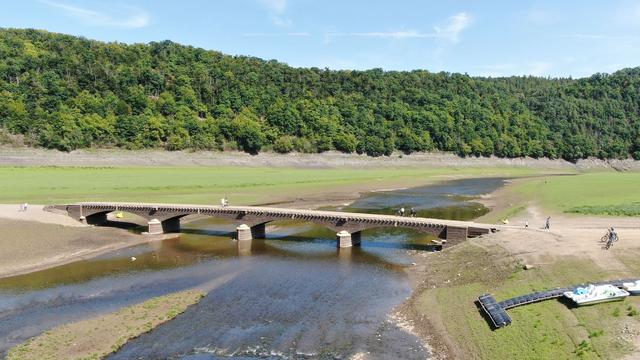
Unusually low water levels in the Edersee reservoir in Germany have led to the reappearance of 'Edersee Atlantis,' a collection of villages that were flooded in 1913 to create the artificial lake. The drought conditions have exposed the remnants of these submerged communities, drawing public attention to the historical event and its physical traces. This phenomenon highlights the significant impact of water scarcity on landscapes and historical memory. The exposed ruins offer a rare glimpse into the past, reminding observers of the communities that once thrived in the area before the construction of the dam. The Edersee, one of Germany's largest reservoirs, plays a crucial role in water management, flood control, and energy production for the region. Its current low levels are a stark visual indicator of the ongoing environmental challenges posed by climate change and prolonged dry periods. The reappearance of the villages serves as a tangible connection to a history that was otherwise submerged and largely forgotten by many. This event underscores the dynamic relationship between natural cycles, human infrastructure, and the preservation of cultural heritage.
The exposure of the submerged villages due to drought in the Edersee reservoir serves as a potent, visible manifestation of climate change's impact on water resources and historical sites. This event prompts reflection on the long-term sustainability of large-scale water infrastructure, such as dams and reservoirs, which were designed without anticipating the current extremes of hydrological variability. The reappearance of 'Edersee Atlantis' highlights a systemic tension between the utility of water storage for human needs and the potential loss of cultural heritage when water levels recede. Future water management strategies will increasingly need to balance these competing demands, considering the environmental and societal consequences of both scarcity and abundance. The event also underscores the importance of robust environmental monitoring and adaptive planning to mitigate risks associated with climate-induced hydrological shifts.
AI-generated to prompt reflection — not editorial opinion, not advice, not a statement of fact. How this works.