Dust clouds blanket Uberlândia and Uberaba due to strong winds
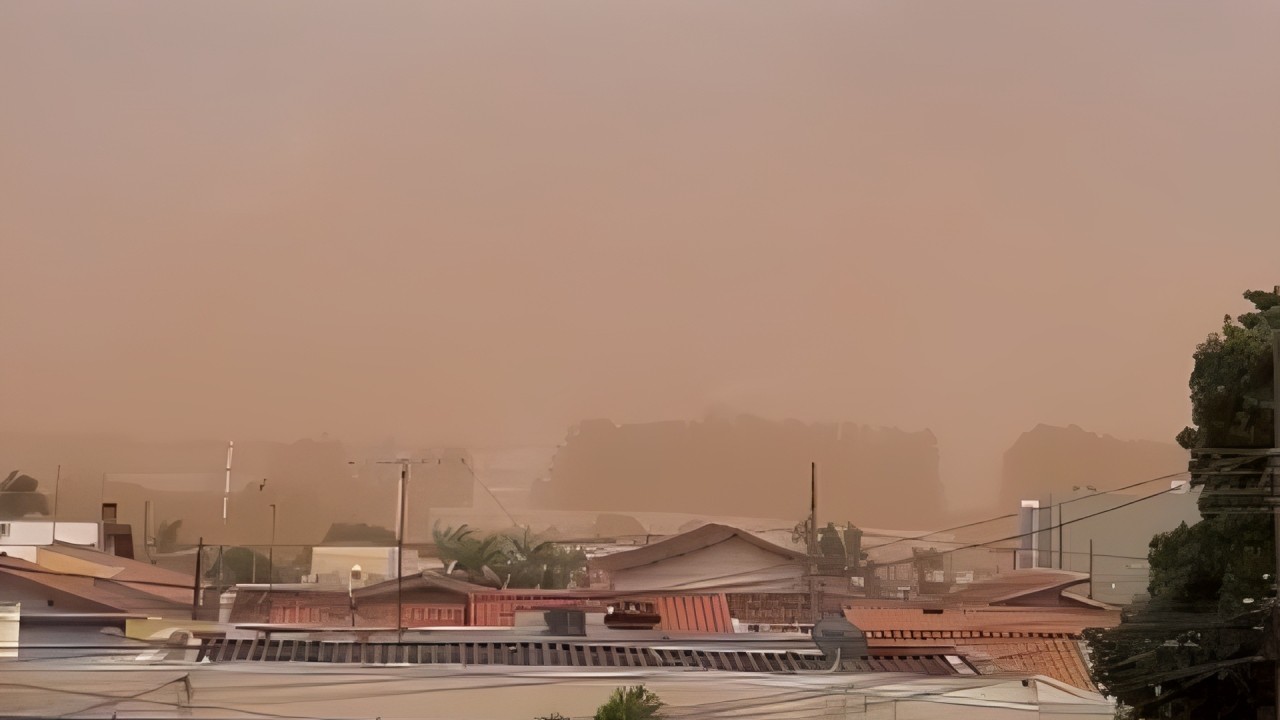
A significant dust cloud covered parts of Uberlândia and Uberaba in Minas Gerais, Brazil, on Friday afternoon, October 24th. The phenomenon was caused by strong winds that lifted dust from rural areas with exposed soil, carrying it into the urban centers and reducing visibility. Climatologist Alcione Wagner explained that this event is common during this time of year, characterized by dry weather and low air humidity. The intense winds pick up soil particles from exposed regions and transport them to cities. Around 5 PM, the dust mass reached Uberlândia, turning the sky reddish and impairing visibility in some locations, similar to the situation in Uberaba. Despite the dust, a slight weather change is anticipated between Friday and Saturday, with a cold front expected to increase cloudiness and bring isolated light drizzles to the Triângulo Mineiro region. The expected rainfall is minimal, between 1 and 3 millimeters, and unlikely to cause a significant temperature drop, with afternoons remaining warm. The forecast for the last week of July indicates even hotter temperatures, potentially reaching 37°C in some Triângulo Mineiro municipalities due to heat transport from the North region. Meteorologists also warn that low relative humidity will persist, exacerbating discomfort and increasing the likelihood of dust clouds during windy conditions.
The dust cloud event in Uberlândia and Uberaba highlights the intersection of meteorological conditions and land management practices. While strong winds and dry seasons are natural occurrences, the extent of dust transport is exacerbated by exposed soil in rural areas, suggesting a potential link to agricultural or land-use patterns that leave soil vulnerable. As climate patterns shift and potentially intensify dry spells and wind events, such phenomena may become more frequent or severe. This underscores the need for adaptive land management strategies, such as soil conservation techniques and sustainable agriculture, to mitigate the impact of natural weather events on urban air quality and public health. Future planning should consider the interplay between climate variability and human activity to build resilience against such environmental challenges.
AI-generated to prompt reflection — not editorial opinion, not advice, not a statement of fact. How this works.