Dutch Authorities Install Cameras on Merwede Bridge to Enforce Truck Ban
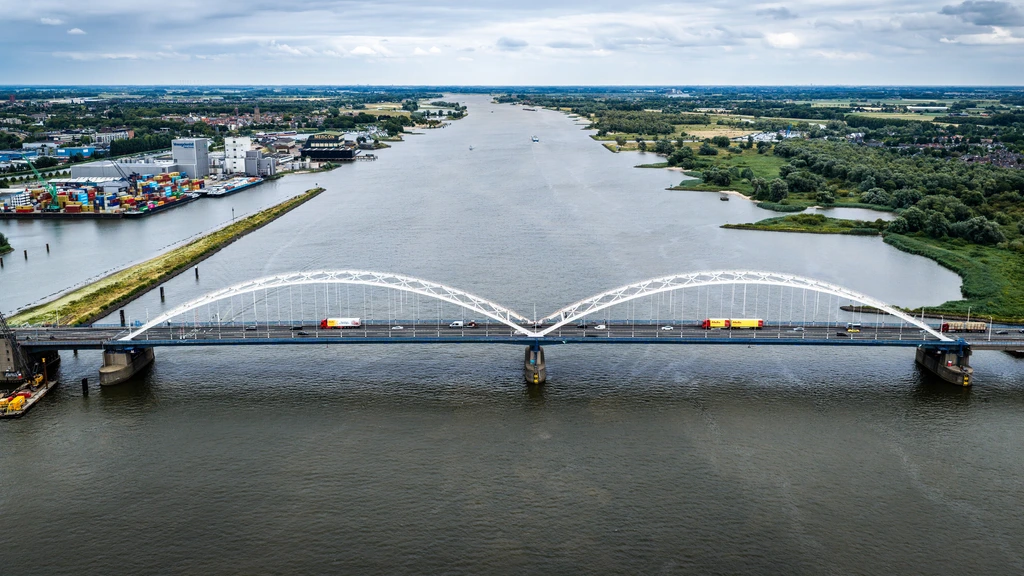
Rijkswaterstaat, the Dutch Directorate-General for Public Works and Water Management, is set to begin enforcing a ban on heavy goods vehicles using the Merwede Bridge within two weeks. To facilitate this, cameras will be installed at the bridge to monitor compliance. Violators will face a fine of 500 euros. Despite the bridge being closed indefinitely to trucks since last Saturday, many continue to use it. Rijkswaterstaat has issued an urgent appeal to truck drivers and transport companies to avoid the bridge. The new system will employ ANPR (Automatic Number Plate Recognition) cameras to read license plates automatically. Enforcement will be a collaborative effort between Rijkswaterstaat, the police, and the Public Prosecution Service, according to Omroep Brabant.
The closure for trucks stems from the discovery that the steel in various parts of the bridge is weaker than anticipated, compromising safety. This structural weakness was identified during an inspection. The immense pressure from heavy traffic poses a risk of deforming the steel plates in the arch, potentially impacting the entire structure. The bridge is reportedly due for replacement. Passenger cars, motorcycles, and delivery vans are still permitted to cross, as are public transport buses and emergency services. Trucks are being rerouted via the A16 and A2 highways, with hazardous material transport directed solely via the A2.
The installation of ANPR cameras and the imposition of fines represent a reactive measure to address a critical infrastructure failure, specifically the Merwede Bridge's compromised steel structure. This situation highlights a systemic challenge in maintaining aging infrastructure, particularly under increasing load demands. The reliance on reactive enforcement, rather than proactive, predictive maintenance or accelerated replacement schedules, suggests potential underinvestment or misallocation of resources in public works. Looking ahead, the incident underscores the growing need for advanced material science integration and predictive analytics in infrastructure management to anticipate and mitigate such risks before they impact public safety and disrupt transportation networks. The trade-off between immediate enforcement costs and the long-term economic and safety benefits of timely infrastructure renewal warrants careful consideration by governing bodies.
AI-generated to prompt reflection — not editorial opinion, not advice, not a statement of fact. How this works.