Dutch Explosives Unit Warns of Exposed Munitions Due to Low River Levels
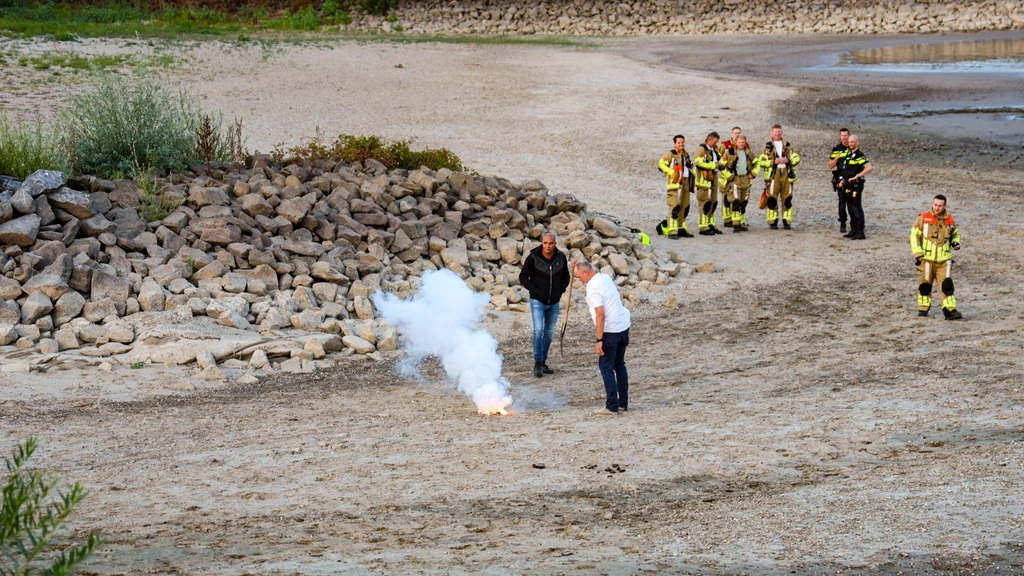
The Dutch Explosives Ordnance Disposal (EOD) unit is issuing a warning about phosphorus grenades and other munitions that are becoming exposed as river levels drop significantly. These items pose a dual threat: they can easily ignite, and a subsequent explosive charge could detonate. The EOD advises anyone encountering such items not to touch them, to immediately call the police, and to leave the area. The police will then investigate and involve the EOD if necessary.
Recently, in Doornenburg near Nijmegen, fishermen encountered two grenades on a dried-out riverbank along the Waal. One was identified as a standard mortar shell, but the other contained phosphorus. Upon contact with the fishermen's cart, the phosphorus began to smoke and then ignited. The fishermen alerted emergency services, leading to the EOD's intervention to safely neutralize the grenade. While the explosive charge did not detonate in this instance, the EOD highlighted that such a possibility exists.
Phosphorus was added to much World War II-era ammunition, despite current international law prohibiting it, due to its ability to cause severe burns and create smoke screens. Post-war, large quantities of this ammunition were dumped into major rivers. Over eighty years later, the porous casings of these munitions are deteriorating, increasing the risk of accidental ignition or detonation upon contact. Despite the low water levels, the number of reported incidents remains relatively low, with only a few per week, though this is being monitored closely.
The current low river levels in the Netherlands are revealing historical ordnance, primarily from World War II, posing a public safety risk. This situation underscores a long-term environmental and safety challenge stemming from past military practices, where discarded munitions are now resurfacing due to natural environmental shifts. The EOD's response protocol, involving public awareness and police coordination, is a reactive measure addressing immediate threats. Future considerations might involve proactive mapping and retrieval strategies for known dumping sites, particularly as climate change may lead to more frequent and extreme low-water events. This incident highlights the enduring legacy of conflict and the need for sustained vigilance and adaptive management of environmental hazards that transcend generations.
AI-generated to prompt reflection — not editorial opinion, not advice, not a statement of fact. How this works.