Dutch Government Urges Spain to Act Swiftly on Ceuta Migrant Situation
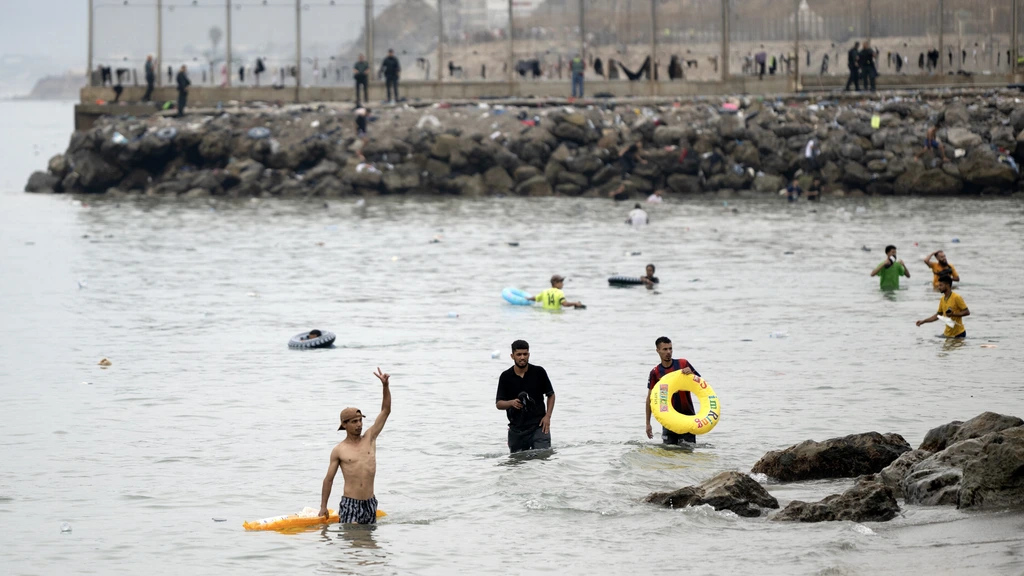
The Dutch cabinet is pressing Spain for immediate action to address the influx of migrants in Ceuta, a Spanish enclave bordering Morocco. The government wants Spain to quickly deport the approximately 50,000 migrants who have arrived in recent days, either by swimming, walking, or climbing fences, and to prevent them from reaching the Spanish mainland. Dutch Foreign Affairs Minister Berendsen stated that Spain needs to implement measures "in the coming hours, today." Currently, the Dutch government does not deem it necessary to implement additional European or national measures, despite concerns from some right-wing parties like the PVV, JA21, BBB, and VVD. These parties fear that migrants will travel unimpeded to other European countries via Spain. The VVD faction leader suggested that if Spain fails to secure its borders and return migrants, Frontex should intervene, and suspending Schengen could be considered. JA21 has submitted parliamentary questions regarding how the government will monitor migrant travel to the Netherlands. The CU party also expressed criticism, expecting Spain and Morocco to be addressed and the young men to be repatriated swiftly. Minister Berendsen acknowledged concerns about migrants potentially reaching the Dutch application center in Ter Apel but stated this is not currently the case. While initially diplomatic, the Minister's tone has hardened, indicating that if no changes occur today, discussions about EU or national measures will commence, though specific national actions remain undisclosed. Spain has reportedly deployed its military to the area.
The situation in Ceuta highlights the complex interplay between national sovereignty, EU border management, and the humanitarian challenges of migration. The Dutch government's request for swift Spanish action reflects a pragmatic approach focused on immediate containment and deportation, prioritizing border control within the Schengen framework. However, the underlying issue is the systemic pressure on external EU borders, which can strain intra-EU relations when individual member states face overwhelming influxes. The call for potential Schengen suspension, while a drastic measure, signals the growing tension between open borders and national security concerns. Future policy discussions will likely need to balance rapid response mechanisms with sustainable, long-term solutions that address the root causes of migration and ensure equitable burden-sharing among EU member states, rather than relying solely on reactive measures by frontline nations.
AI-generated to prompt reflection — not editorial opinion, not advice, not a statement of fact. How this works.