Dutch Inland Waterways Closed to Shipping Due to Drought, Impacting Businesses
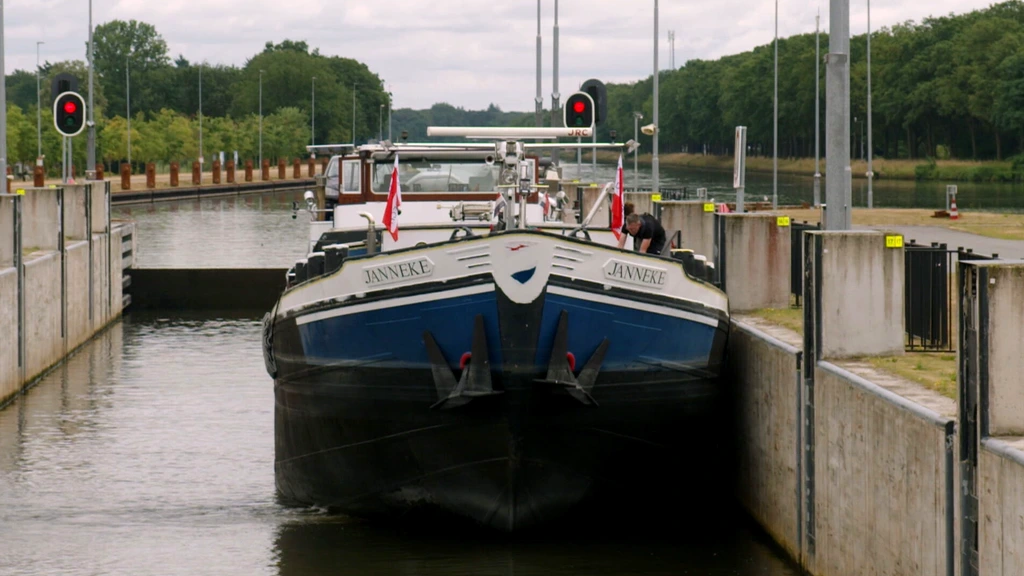
The Twentekanaal waterway in the Netherlands is being closed to all shipping traffic earlier than anticipated due to severe drought and low water levels. Skipper Hendrik Hans Stroomberg reported that the sluice at Eefde will be shut down at noon, preventing any further vessel passage. All ships currently on the Twentekanaal must be clear by the following morning. This drastic measure, unprecedented due to drought, is being implemented to prevent irreparable damage to dikes, the riverbed, and the natural environment. While individual skippers may adapt, the closure poses significant challenges for businesses reliant on the waterway for transporting raw materials and products. ForFarmers, a feed manufacturer, has increased its inventory and is temporarily using trucks to compensate for the lack of barge transport. However, not all companies have the capacity for large stockpiles or alternative logistics. Frank van Zomeren, manager at Port of Twente, is in discussions with affected businesses to find solutions. He acknowledged that the worsening conditions on the IJssel river had been observed for weeks, but the indefinite closure by the government was unexpected and a "bitter pill." The waterway is crucial for transporting goods like sand, petroleum, salt, metal, and fuel, with many companies awaiting these essential supplies. The duration of the closure and the resulting economic damage remain unknown at this time.
The Dutch government's decision to close the Twentekanaal waterway highlights the escalating systemic risks posed by climate change-induced drought on critical infrastructure. While the immediate imperative is environmental protection and infrastructure preservation, the indefinite closure creates significant economic friction for businesses dependent on waterborne logistics. This situation underscores a broader challenge: the need for adaptive infrastructure and supply chain resilience in the face of increasingly unpredictable environmental conditions. Future planning must integrate robust contingency measures, potentially including diversified transport options and strategic resource management, to mitigate the impact of such environmental shocks on the economy and ensure the continuity of essential goods movement.
AI-generated to prompt reflection — not editorial opinion, not advice, not a statement of fact. How this works.