Dutch Minister Seeks Dialogue with China Amid Trade Tensions
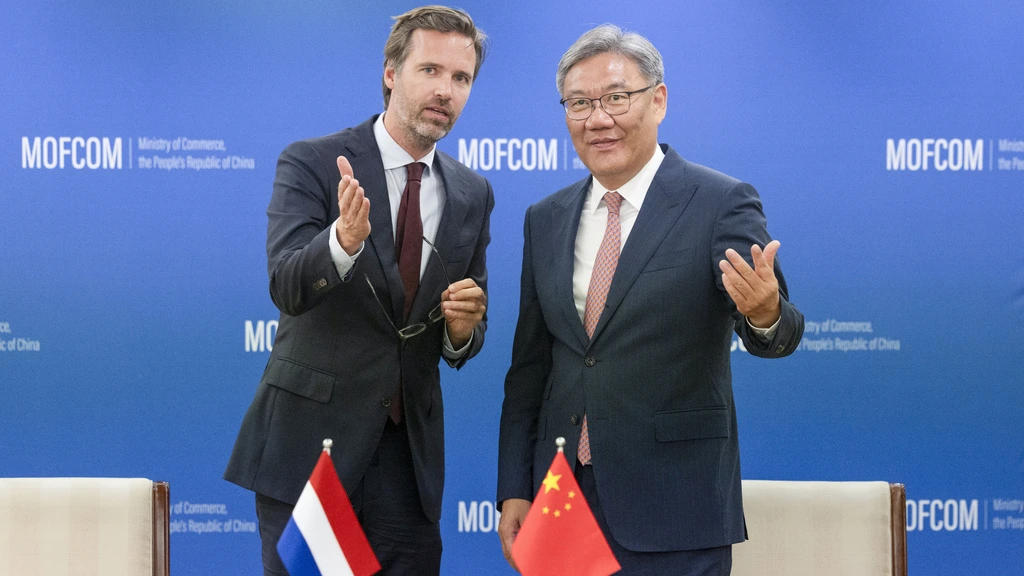
Dutch Minister for Foreign Trade and Development Cooperation, Geoffrey van Leeuwen, has begun a visit to Beijing, aiming to de-escalate strained relations between the Netherlands and China. This visit contrasts sharply with a similar trade mission eight years prior, which saw 165 Dutch companies participate; this time, only a tenth of that number joined. Minister Van Leeuwen acknowledged that the bilateral relationship has become unnecessarily tense in recent years, citing issues such as the controversy surrounding chipmaker Nexperia. He seeks to improve these ties, although many trade disputes are now being handled at the European Union level. A significant point of contention is the substantial trade surplus China holds with the EU, which the EU argues is fueled by unfair state subsidies, creating barriers for European businesses in the Chinese market. Van Leeuwen highlighted that China's daily exports to Europe nearly doubled the value of imports from Europe last year, a situation deemed unsustainable. Several Dutch companies, including meat processor VION, have faced Chinese import tariffs in retaliation for EU levies on Chinese electric vehicles. During the visit, Dutch companies voiced their concerns to the Chinese minister. Chinese firms also seized the opportunity to present their issues. Yangzhou Yangjie Electronic Technology, a supplier to the European auto industry, requested an extension of its sanctions deferral, granted due to the European chip shortage exacerbated by Chinese export restrictions on Nexperia chips. Nuctech, a provider of scanning and security systems to European ports, also sought the lifting of restrictions imposed due to alleged illegal Chinese state subsidies and potential espionage activities. Minister Van Leeuwen emphasized that these matters are part of a broader EU-China trade dialogue and stressed the importance of preventing a trade war, drawing a parallel with the United States' engagement with China. Chinese Minister Wang expressed a similar desire to avoid conflict and indicated a willingness to address subsidies and overcapacity, but stated China would do so on its own terms. The minister himself was previously sanctioned by China in 2021 for calling the treatment of Uyghurs a genocide, and while he is now visiting as a minister, he affirmed his concerns about the Uyghurs remain. Van Leeuwen believes a new EU law prohibiting products made with forced labor from entering the European market could incentivize China to address this issue.
The Dutch minister's visit underscores the complex interplay between national economic interests and broader geopolitical alignments within the European Union's engagement with China. While seeking to mend bilateral trade relations, the underlying issues of state-sponsored competition, market access, and concerns over forced labor indicate systemic challenges that require coordinated EU-level responses. The minister's reference to the US approach suggests a recognition of the need for robust, unified diplomatic and economic strategies to navigate trade imbalances and ensure fair competition. The situation highlights the inherent tension between fostering economic interdependence and addressing human rights and security concerns, a balancing act that will likely define international relations in the coming decade as global supply chains and technological dependencies evolve.
AI-generated to prompt reflection — not editorial opinion, not advice, not a statement of fact. How this works.