Dutch Railways Returns to Profit Amidst Increased Ridership and Fewer Delays
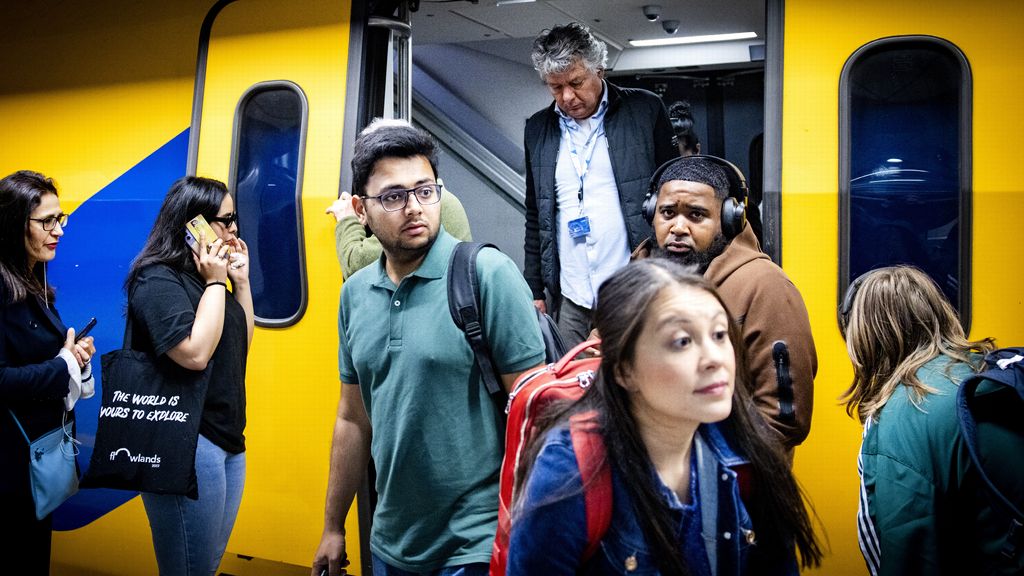
The Nederlandse Spoorwegen (NS), the Netherlands' largest passenger transport company, has emerged from a significant financial downturn, reporting a net profit of 25 million euros for the first half of the year. This marks a substantial recovery after five consecutive years of losses following the COVID-19 pandemic, during which ridership plummeted and fewer regular commuters returned to train travel. Last year, NS experienced a loss of 9 million euros in the same six-month period, though it ended the full year with a profit of 380 million euros, partly due to accounting adjustments. The recent profit is primarily attributed to a rise in passenger numbers, which boosted revenue from passenger transport to 1.7 billion euros. While the exact increase in passenger volume was not specified, NS also benefited from the ability to partially offset rising costs by increasing ticket prices, a move previously constrained by the need to keep public transport attractive during the energy crisis. Punctuality also improved, with NS trains achieving over 86.3% on-time performance in the first half, exceeding the government's requirement of 84.4%. Furthermore, 92.3% of peak-hour travelers secured a second-class seat, surpassing the agreed-upon minimum of 91.7%. Looking ahead, NS aims to attract more travelers, particularly during off-peak hours, through initiatives like the subsidized Nederland Dal Vrij (Netherlands Off-Peak Free) tickets. These tickets are designed to encourage a shift to train travel amidst high fuel prices, and NS notes that a significant portion of subscribers are new to their services, indicating a broader appeal to infrequent travelers. Despite this positive financial trend, NS continues to manage a substantial debt burden, accumulated from ongoing investments in new trains and operational expenses during its loss-making years.
The NS's return to profitability, driven by increased passenger volume and improved operational efficiency, signals a potential stabilization after a prolonged period of financial strain. The company's strategic focus on attracting off-peak travelers, supported by government subsidies, highlights a dynamic approach to leveraging infrastructure and managing demand fluctuations. However, the persistent debt burden, a legacy of past losses and necessary investments, presents an ongoing challenge that may influence future capital allocation and service expansion strategies. As the transportation sector navigates technological advancements and evolving commuter habits, NS's ability to balance financial recovery with service quality and long-term investment will be critical for sustained success in the coming decade.
AI-generated to prompt reflection — not editorial opinion, not advice, not a statement of fact. How this works.