Dutch Rivers Hit Record Lows in July, Threatening Shipping and Industry
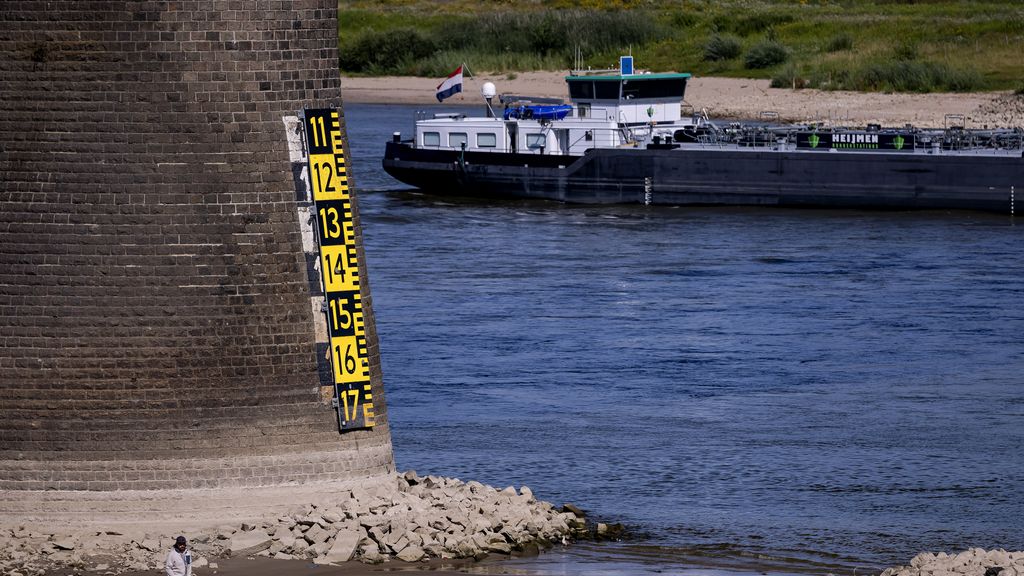
The Netherlands is experiencing exceptionally low river levels in mid-July, comparable to late August or even October, according to Rijkswaterstaat. The Rhine at Lobith, a key entry point, shows critically low water, and the Maas river is also affected. This severe drought, coupled with high temperatures, is creating significant challenges. Shipping is hampered as vessels struggle to maneuver and must reduce cargo loads to avoid grounding. Industrial operations face productivity losses because the warmer, lower water restricts the discharge of cooling water, further increasing its temperature. Ties van Wijk, a marina operator with 35 years of experience, notes this is unprecedented for July, usually a peak season for visiting boats. Daniël van Putten, a Rijkswaterstaat river expert, confirms the alarming situation, attributing it to insufficient water flow from the Rhine basin, particularly the Alps. He highlights that river levels are dropping rapidly, exceeding expectations despite a two-week forecast. Hydrometeorologist Jan Verkade of Deltares and Rijkswaterstaat suggests that anticipated rainfall will be largely offset by evaporation, leaving rivers depleted for at least another week and potentially surpassing the record dry year of 1976. The low water levels exacerbate the risk of prolonged drought. Van Putten explains that diminishing glacial meltwater from the Alps, a crucial summer water source for the Rhine, is a direct consequence of climate change. He also notes the possibility that Switzerland may be retaining water for its own use. While climate change also brings extreme rainfall events, as seen with the Maas river in 2021, this year's focus is on the extreme low discharge. Long-term solutions like river restructuring are distant, and addressing CO2 emissions is deemed essential to mitigate further warming and worsening water scarcity.
The current low river levels in the Netherlands, occurring unusually early in the summer, highlight the intensifying impact of climate change on water resource management. The reduced glacial meltwater from the Alps, a critical supply for the Rhine, signifies a systemic shift in hydrological patterns. This situation creates a complex trade-off between immediate economic needs, such as shipping and industrial cooling, and the long-term necessity of adapting infrastructure and water policies. The reliance on natural water buffers, like Alpine snowpack and glaciers, is proving increasingly precarious. Future strategies will likely need to prioritize water conservation, explore alternative cooling methods for industry, and potentially re-evaluate cross-border water agreements. Addressing the root cause through global CO2 emission reductions remains the most fundamental, albeit challenging, long-term solution to mitigate the escalating frequency and severity of such hydrological extremes.
AI-generated to prompt reflection — not editorial opinion, not advice, not a statement of fact. How this works.