Dutch Safety Regions Warn: Current Resources Insufficient for Multiple Large Wildfires
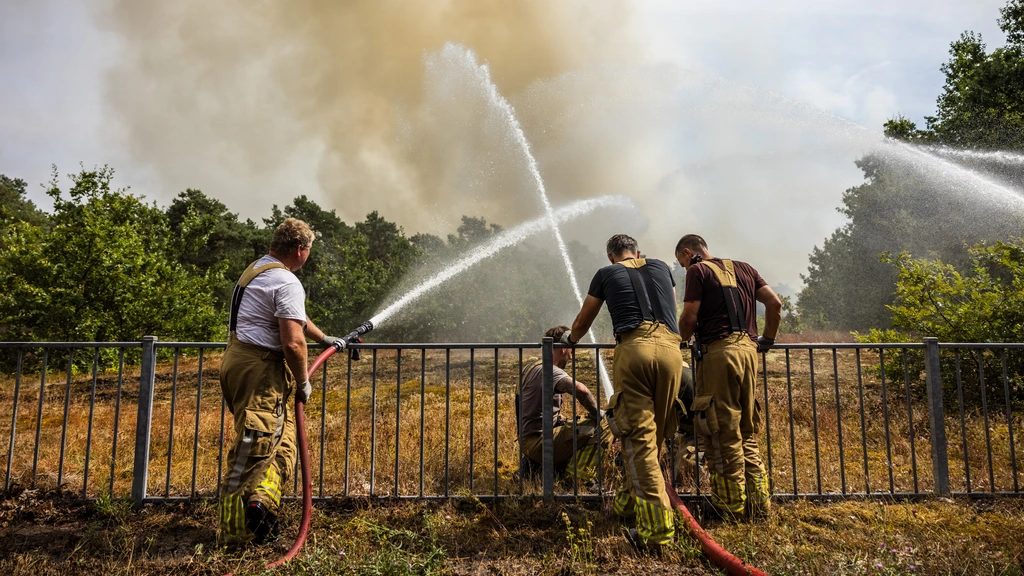
The safety regions in the Netherlands have stated that emergency services are currently unable to handle multiple large-scale wildfires simultaneously, citing the recent incident in Venray as an example. According to Jack Mikkers of the Safety Council, an advisory body representing the 25 safety regions, the capacity of personnel and equipment has been stretched to its limit. He emphasized the need for more specially trained staff and specialized fire engines capable of accessing difficult terrain.
Mikkers highlighted that climate change and prolonged drought have significantly increased the risk of wildfires. This necessitates not only more trained personnel but also different types of fire engines, particularly off-road vehicles suitable for wooded areas, which are not readily available across all regions. He expressed that having these additional resources in place sooner would have been beneficial, referencing recent fires in North Limburg, Oirschot, and the Veluwe as evidence of the escalating risk.
The situation is particularly concerning in wooded areas like the Veluwe, but also affects regions such as Northeast Brabant and the forested parts of Limburg. The growing risk of wildfires demands increased investment in training and resources to ensure adequate preparedness.
The Dutch safety regions' concerns highlight a growing systemic challenge: the mismatch between escalating environmental risks and static resource allocation. Climate change is demonstrably increasing the frequency and intensity of natural disasters like wildfires, creating a demand shock for emergency services. The current infrastructure, designed for a lower-risk environment, is proving insufficient. This situation underscores the need for proactive, long-term investment in specialized training and equipment, rather than reactive responses after crises occur. Future preparedness will likely require a fundamental rethinking of emergency service capacity, potentially involving greater regional cooperation, technological integration for early detection and response, and dedicated funding streams that account for the projected impacts of climate change over the next decade.
AI-generated to prompt reflection — not editorial opinion, not advice, not a statement of fact. How this works.
