Dutch Tourists Flee French Wildfires, Losing Possessions to Flames
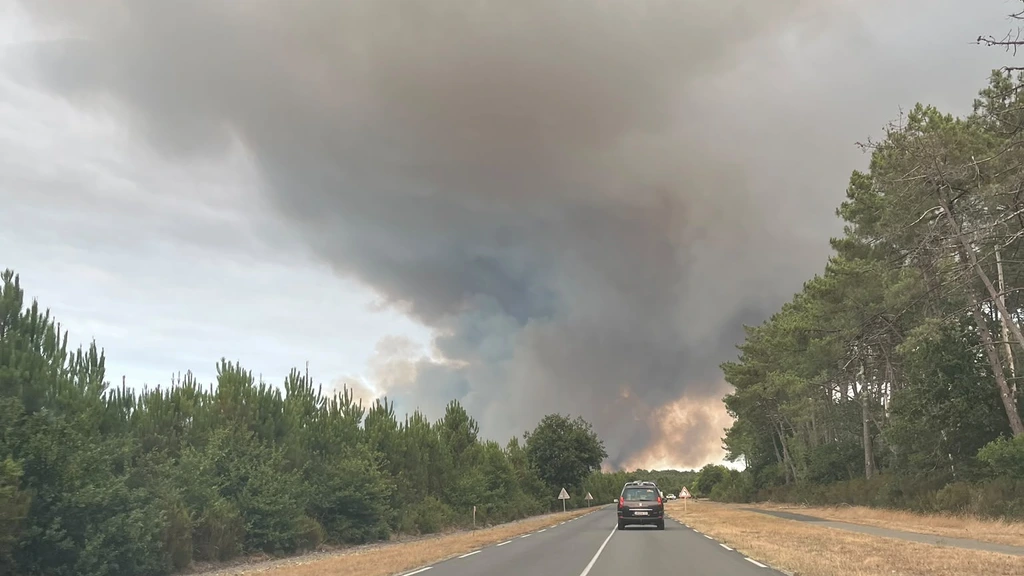
Dutch tourists Lisa Phoelich and her parents, along with others, were forced to evacuate their campsite near Le Porge in the South of France due to rapidly spreading wildfires. They had only set up their caravan and belongings two days prior at the La Grigne campsite, located by the Atlantic Ocean near Bordeaux. Upon returning from the beach around 6:30 PM, they witnessed significant smoke and were instructed to leave immediately, abandoning their caravan and larger items like tables, chairs, and surfboards. The family hopes to retrieve their belongings but is uncertain if the French authorities can control the blaze. Over 3,400 hectares have been destroyed in the Gironde department, leading to the evacuation of more than 20,000 residents and tourists. Unfavorable weather conditions, including strong winds and high temperatures, are expected to persist. The fire, which began in Saumos near the Bassin d'Arcachon, remains uncontained, prompting the EU to send three firefighting aircraft. Meanwhile, separate wildfires in southeastern France between Marseille and Nice have burned 2,700 hectares, forcing over 300 people to evacuate. Firefighters there are supported by Canadair aircraft, Dash planes, and helicopters. Phoelich's family was directed to Lacanau, where hundreds of beds were prepared for evacuees, and she noted the situation was well-organized, with no panic observed among tourists or locals. Another Dutch holidaymaker, Wouter, described a more chaotic evacuation from a different campsite in the same region, with people panicking and insufficient time to hitch their caravan. He received news that his caravan and several cars were destroyed by the fire. He was forced to abandon his belongings and drive away via smaller roads due to closures, only to get stuck in a long traffic jam.
The wildfires in France highlight the increasing vulnerability of tourist destinations to climate-driven extreme weather events. The scale of evacuations and property loss underscores the need for enhanced disaster preparedness and response strategies, particularly in regions heavily reliant on tourism. As climate change intensifies, the frequency and severity of such events are likely to rise, necessitating proactive measures in land management, early warning systems, and cross-border cooperation for firefighting resources, as demonstrated by the EU's deployment of aircraft. The differing experiences of evacuees, from organized shelters to chaotic departures and significant material loss, point to systemic challenges in ensuring equitable and effective support during crises. Future planning must consider the long-term economic and social impacts on communities and individuals affected by these recurring environmental threats.
AI-generated to prompt reflection — not editorial opinion, not advice, not a statement of fact. How this works.