Dutch Transport Sector Considers Legal Action Over Merwedebrug Closure
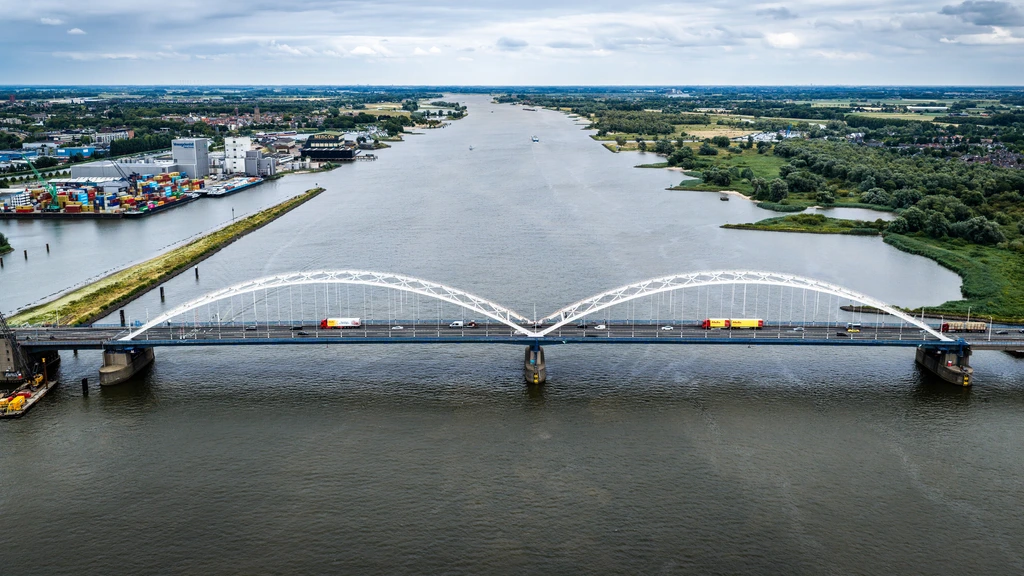
The Dutch transport and logistics sector, represented by TLN (Transport en Logistiek Nederland), is exploring legal options following the immediate closure of the Merwedebrug for freight traffic. Rijkswaterstaat, the national road authority, determined it could no longer guarantee the bridge's safety, leading to the abrupt ban on heavy vehicles. While TLN acknowledges the safety concerns as valid, the organization questions whether the government adequately prevented this situation. TLN chairman Elisabeth Post highlighted that similar issues plagued the bridge in 2016, raising concerns about potential government negligence in infrastructure management. The Merwedebrug, a crucial link on the A27 connecting Brabant and South Holland near Gorinchem, is vital for freight transport between Breda and Utrecht. The closure necessitates detours via the A15, A16, and A2, adding an estimated 45 to 60 minutes of travel time for trucks. TLN estimates the daily economic impact on the sector at approximately 1.5 million euros. The organization is currently consulting with legal experts to determine potential follow-up actions, including the possibility of a damages claim, though this has not yet been confirmed. The decision to close the bridge stemmed from an inspection revealing that certain steel components were weaker than anticipated, posing a risk of deformation under heavy traffic loads, which could compromise the bridge's structural integrity. The bridge previously faced a similar closure for nearly three months in 2016 due to hairline cracks found in its support beams.
The closure of the Merwedebrug due to structural weaknesses, despite prior issues in 2016, points to potential systemic challenges in Dutch infrastructure maintenance and long-term planning. The economic ramifications for the transport sector, estimated at 1.5 million euros daily, underscore the critical need for proactive asset management and timely capital investment in key transportation arteries. The legal inquiry by TLN reflects a growing trend of private sector entities seeking accountability from public bodies when infrastructure failures disrupt commerce. Future governance models may need to incorporate more robust lifecycle assessments and predictive maintenance strategies, especially as traffic loads and environmental factors evolve, to mitigate the risk of recurring closures and their associated economic and logistical costs.
AI-generated to prompt reflection — not editorial opinion, not advice, not a statement of fact. How this works.