Dwarf Galaxy 'Gaia Sausage' Collision Reshaped Our Milky Way 10 Billion Years Ago
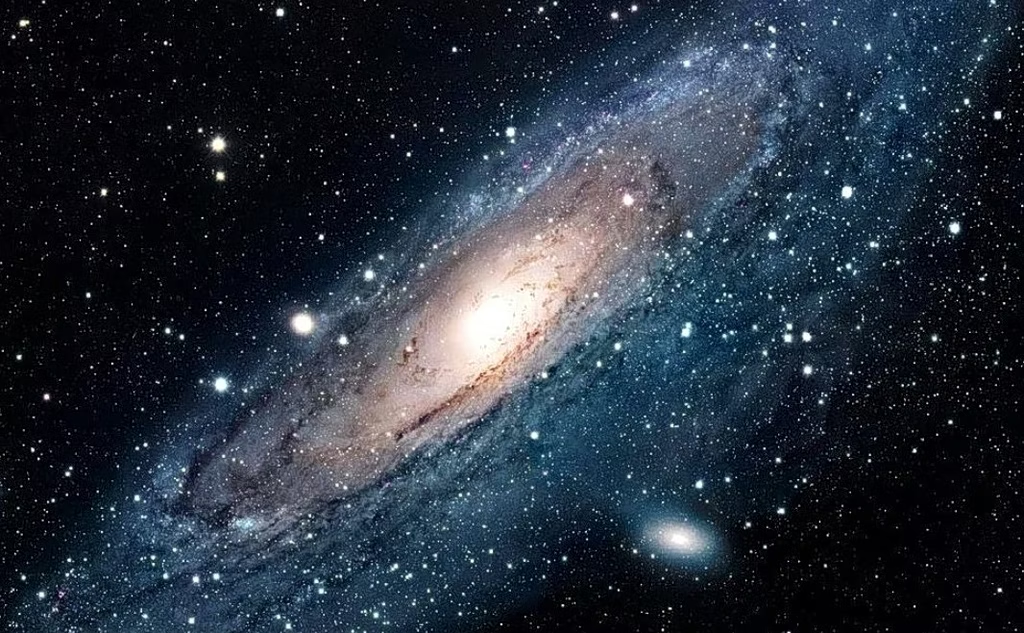
New research suggests that our Milky Way galaxy underwent a significant transformation approximately 10 billion years ago. This dramatic event occurred when our galaxy collided with a dwarf galaxy known as 'Gaia Sausage'. The impact of this collision is believed to have fundamentally reshaped the structure of the Milky Way. Scientists have uncovered evidence indicating that the galactic disk was essentially 'turned upside down' as a result of this ancient cosmic encounter. The Gaia Sausage dwarf galaxy, now integrated into the Milky Way, played a crucial role in this early evolutionary phase. This discovery provides valuable insights into the dynamic history of our own galaxy. Understanding these past mergers helps astronomers piece together the complex formation processes of galaxies like our own. The findings highlight the violent and interactive nature of galactic evolution over cosmic timescales.
The collision between the Milky Way and the Gaia Sausage dwarf galaxy 10 billion years ago illustrates a fundamental aspect of galactic evolution: mergers are common and transformative. This event reshaped our galaxy's structure, underscoring that large galaxies are not static entities but are built through accretion and interaction. Understanding such historical events is crucial for refining models of galaxy formation and evolution, particularly in the context of the early universe. The integration of smaller galaxies into larger ones drives stellar population diversity and influences the distribution of dark matter. Future research may further elucidate the precise mechanisms of this 'flipping' and its long-term implications for galactic dynamics and the potential for star formation.
AI-generated to prompt reflection — not editorial opinion, not advice, not a statement of fact. How this works.