Dwarf Sperm Whale with Shark Bite Washes Ashore in Cabo Frio
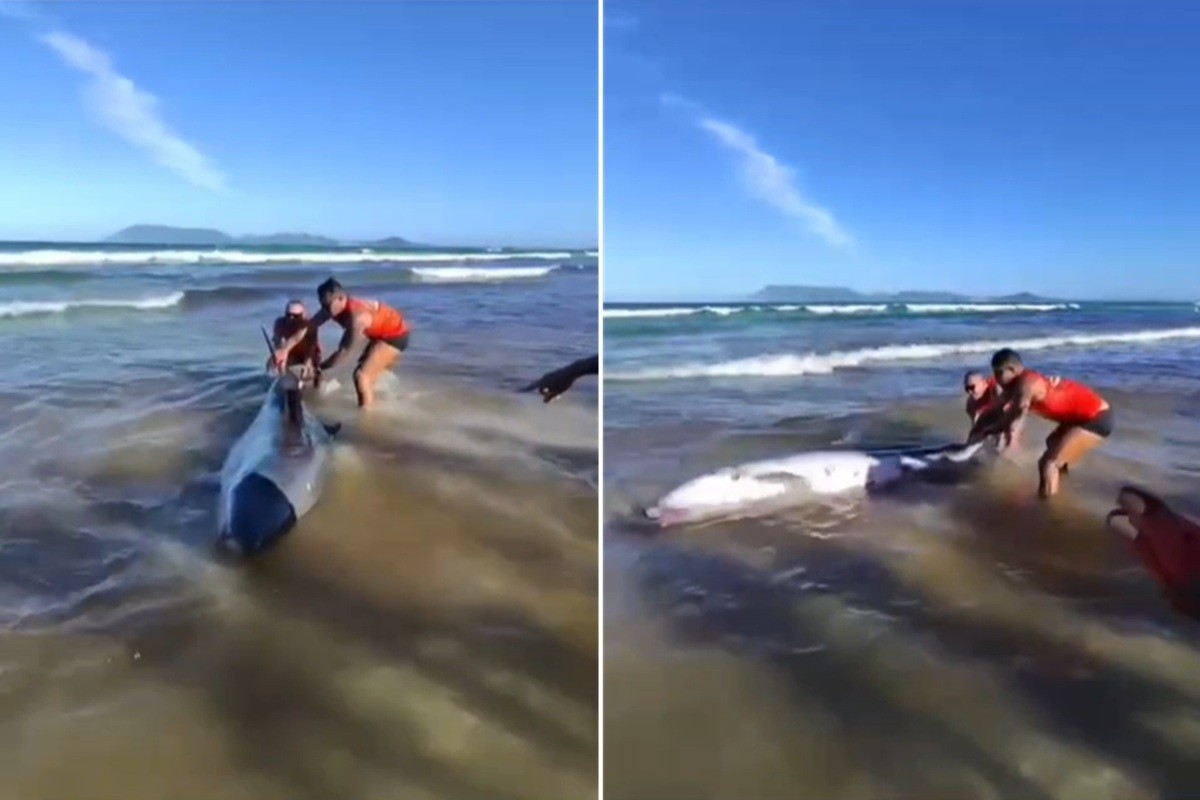
A dwarf sperm whale, identified by biologist Eduardo Pimenta as a species rarely seen near the coast, washed ashore on Praia do Forte in Cabo Frio, Rio de Janeiro state, on Tuesday afternoon, October 21st. The animal, which had previously approached the shoreline, was observed to have an infected wound consistent with a shark bite. Firefighters from the 18th Military Firefighter Group used personal watercraft to guide the whale into deeper waters to prevent it from remaining in the surf. The whale re-stranded during the night. By Wednesday morning, October 22nd, teams from the BW group were monitoring the situation. A veterinarian from São Francisco de Itabapoana was en route to assess the whale's health and administer supportive care, potentially including glucose. Firefighters emphasized that whales are wild animals and the public should maintain a distance of 10 to 15 meters, avoiding any physical contact, as noise and crowds can cause stress and increase the risk of accidents. Direct contact also poses a risk of pathogen and parasite transmission. The dwarf sperm whale plays a crucial role in deep-sea ecosystems as a predator of squid and mesopelagic fish and serves as an indicator of ocean health. The incident highlighted the importance of activating beach monitoring programs for proper marine animal protection and management protocols.
The stranding of this dwarf sperm whale, compounded by a shark bite injury, underscores the complex interplay between marine predators and their prey, as well as the vulnerability of deep-sea species when they venture into shallower waters. The event serves as a stark reminder of the ecological pressures these animals face, including potential shifts in prey distribution and increased interactions with other marine life. The rapid response by emergency services and veterinary professionals highlights established protocols for marine mammal strandings, yet the re-stranding suggests the animal's condition was severe. Future monitoring should consider the broader implications of oceanographic changes that might influence animal behavior and health, potentially leading to more frequent encounters with threats like shark predation or entanglement. Understanding these systemic factors is crucial for developing proactive conservation strategies that address the root causes of such incidents, rather than solely focusing on reactive rescue efforts.
AI-generated to prompt reflection — not editorial opinion, not advice, not a statement of fact. How this works.