Dying Stars May Be Kicked into Space by Ejected Mass, New Model Suggests
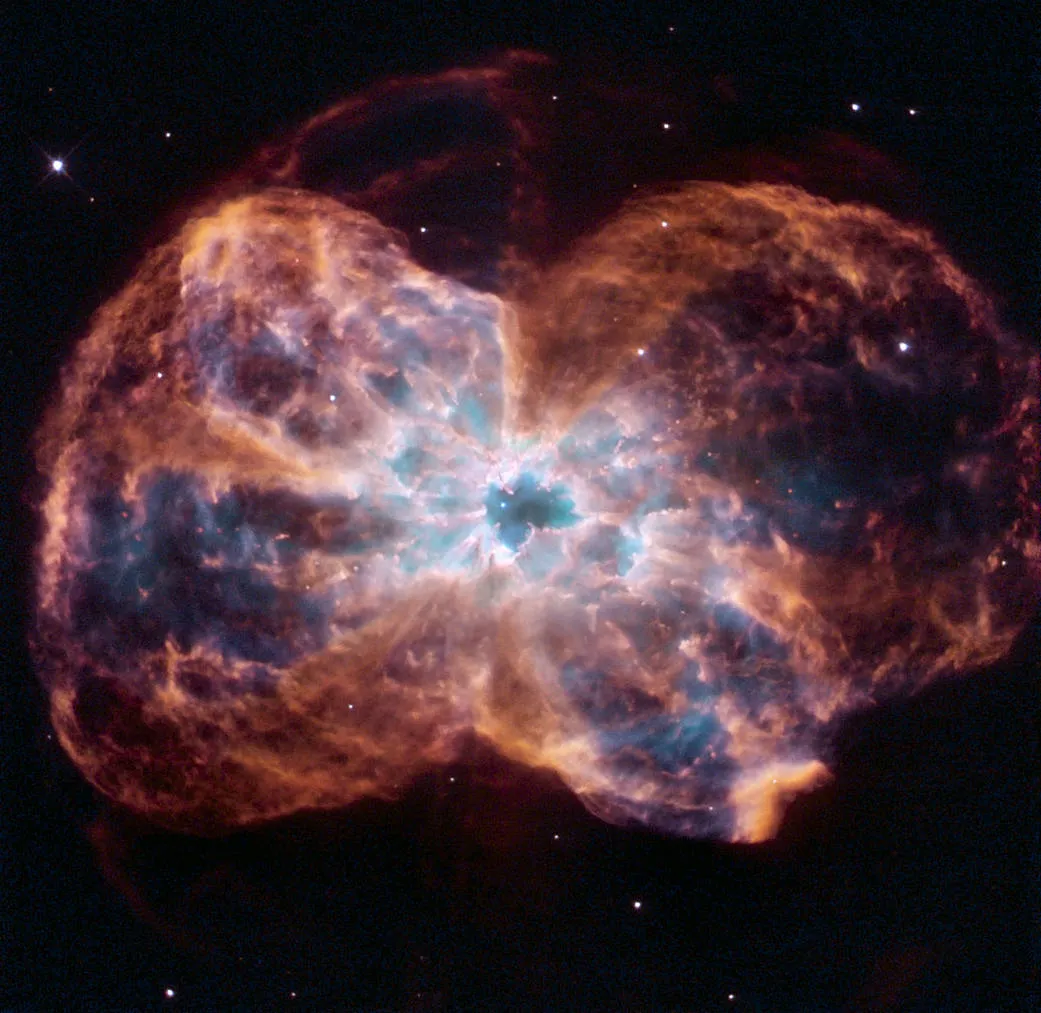
A new theoretical model proposes that dying stars, contrary to traditional understanding, may not simply shed their outer layers serenely. Instead, as stars like our Sun approach the end of their lives, they might expel mass in an asymmetrical fashion. Each significant ejection of material could impart a small recoil or "kick" to the star. Over hundreds of thousands of years, an accumulation of approximately ten thousand such kicks could propel the star to drift through interstellar space at a notable velocity. This proposed mechanism offers a potential explanation for the observed tendency of wide binary star systems to disintegrate when one of the stars evolves into a white dwarf. The model suggests a more dynamic and potentially violent end-of-life process for stars than previously assumed. Further observational data will be required to confirm this intriguing hypothesis.
This revised model challenges the conventional depiction of stellar death, suggesting a more active, dynamic process involving asymmetrical mass ejection and subsequent stellar "kicking." By introducing this recoil mechanism, the hypothesis offers a parsimonious explanation for the observed dissolution of wide binary systems, a phenomenon previously attributed to other factors. This framework prompts consideration of how stellar evolution models might need recalibration to account for such energetic, albeit gradual, propulsive forces. The long-term implications for galactic dynamics and the distribution of stellar remnants could be significant, warranting further investigation into the observational signatures of this proposed process.
AI-generated to prompt reflection — not editorial opinion, not advice, not a statement of fact. How this works.