Dyson's Agricultural Ventures: A Look Inside His Vast Lincolnshire Estate
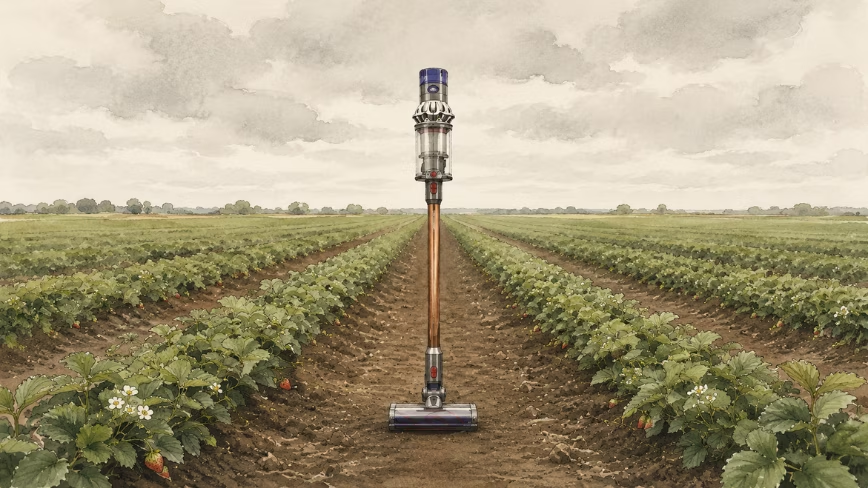
Sir James Dyson has established a significant agricultural operation on his estate in Lincolnshire, England. Within a massive glasshouse, comparable in size to approximately 20 football pitches, strawberry plants are cultivated using an innovative vertical farming system. These plants are housed on large, slowly rotating Ferris wheels, each standing about 5.5 meters tall and weighing nearly half a tonne. This automated system allows the strawberry plants to move continuously through the light, optimizing their growth conditions. The operation is situated on dark, flat soil characteristic of the Lincolnshire region. This venture represents a substantial investment in agricultural technology and land use by the Dyson empire, extending beyond its well-known consumer electronics and engineering businesses.
Sir James Dyson's expansion into large-scale agriculture, particularly with advanced vertical farming techniques, highlights a growing trend of industrialists leveraging technological innovation for food production. This approach addresses potential future challenges in food security and resource management by optimizing land and water use. The significant capital investment in such infrastructure suggests a long-term vision for sustainable and efficient farming, potentially influencing agricultural practices and market dynamics in the coming decade. Such ventures also raise questions about land ownership, resource allocation, and the role of private enterprise in addressing public goods like food supply.
AI-generated to prompt reflection — not editorial opinion, not advice, not a statement of fact. How this works.