Early Physiotherapy Transforms Premature Baby's Development in São Paulo
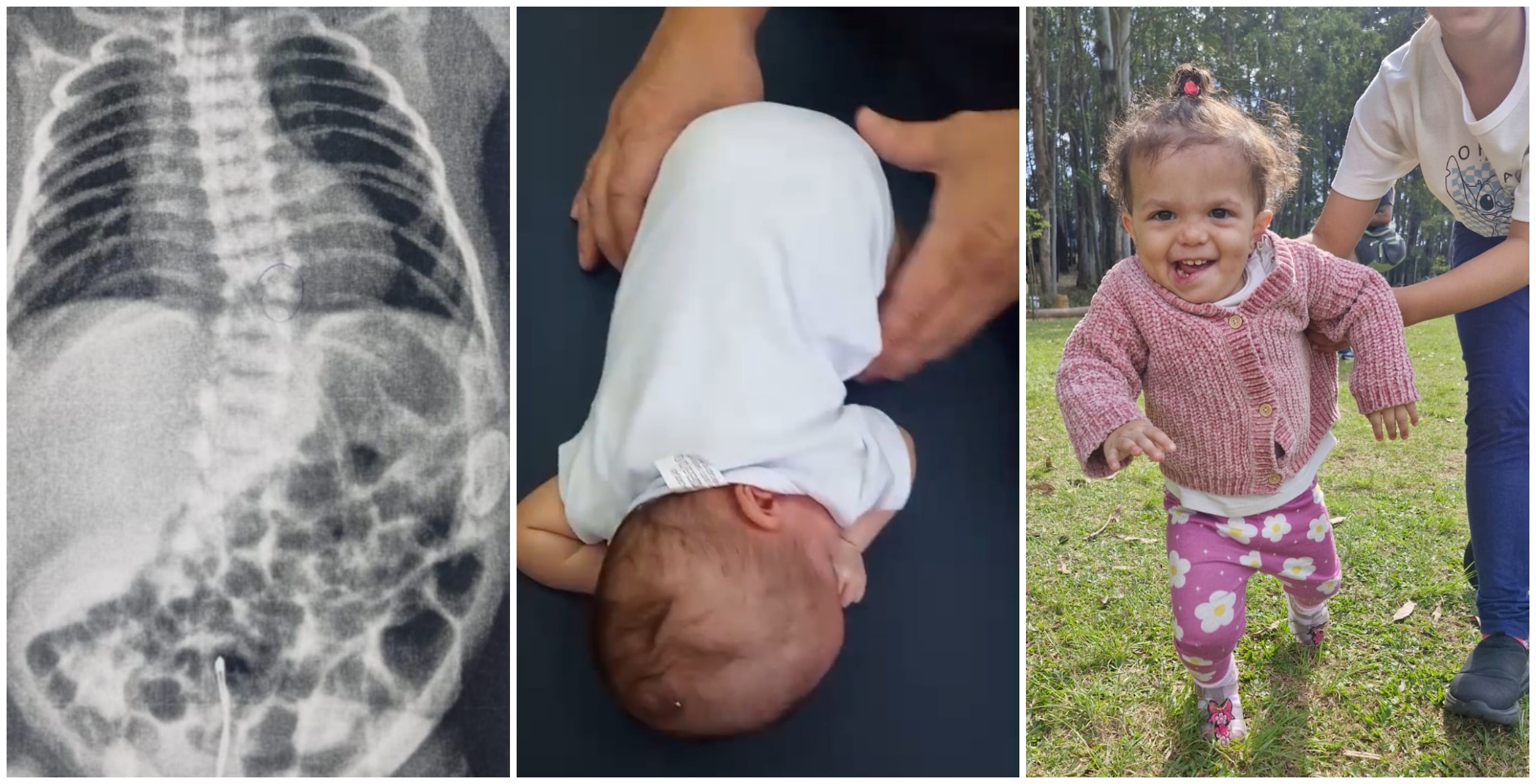
A premature baby girl, Alicia de Jesus Satiro, born at 33 weeks gestation in Santo André, São Paulo, faced significant health challenges upon her discharge from the neonatal ICU. She was diagnosed with congenital scoliosis, plagiocephaly, congenital torticollis, severe pulmonary dysplasia, and facial paralysis. Congenital scoliosis is a birth defect causing abnormal spinal curvature, while positional plagiocephaly results in head flattening from prolonged positioning. Congenital torticollis restricts neck movement, leading to a tilted head, and facial paralysis affects facial muscle control. Pulmonary dysplasia impacts lung development. Just one week after leaving the hospital, Alicia began free early intervention physiotherapy at the Santa Marcelina Faculty's Clinic-School in Itaquera, São Paulo. Now 1 year and 6 months old, Alicia demonstrates independent walking, good postural control, and remarkable progress. Her scoliosis curvature reduced from 18 to 7 degrees, plagiocephaly was corrected, and torticollis resolved; only facial paralysis requires ongoing monitoring. Her case will be presented at the III International Cerebral Palsy Congress in Campinas. Alicia's mother, Verônica de Jesus, described the high-risk monoamniotic twin pregnancy and the initial fears that Alicia might not develop typically, walk, or talk. Despite initial concerns about scoliosis, torticollis, a heart condition, and facial muscle issues, early physiotherapy proved crucial. The treatment, led by physiotherapist Arthur Pinto dos Santos Junior, focused on specific stimuli to encourage typical motor development in Alicia's highly adaptable infant brain. The rapid intervention within a week of her ICU discharge was key to her swift recovery, with significant improvements noted in the initial sessions.
This case highlights the critical impact of early, specialized physiotherapy for premature infants with complex medical conditions. The swift intervention, initiated within a week of hospital discharge, capitalized on the neuroplasticity of Alicia's developing brain, facilitating significant motor and postural improvements. The positive outcome, including a dramatic reduction in spinal curvature and the achievement of independent walking, underscores the value of accessible, high-quality early intervention programs. This narrative also implicitly points to systemic challenges in neonatal care, where identifying and addressing developmental risks promptly can mitigate the need for more intensive or surgical interventions later. The success of this approach suggests a need for broader integration of such physiotherapy services into standard post-natal care pathways, particularly for high-risk newborns, to optimize long-term health outcomes and reduce future healthcare burdens.
AI-generated to prompt reflection — not editorial opinion, not advice, not a statement of fact. How this works.