Early Universe Galaxies: Webb Telescope Investigates Their Demise
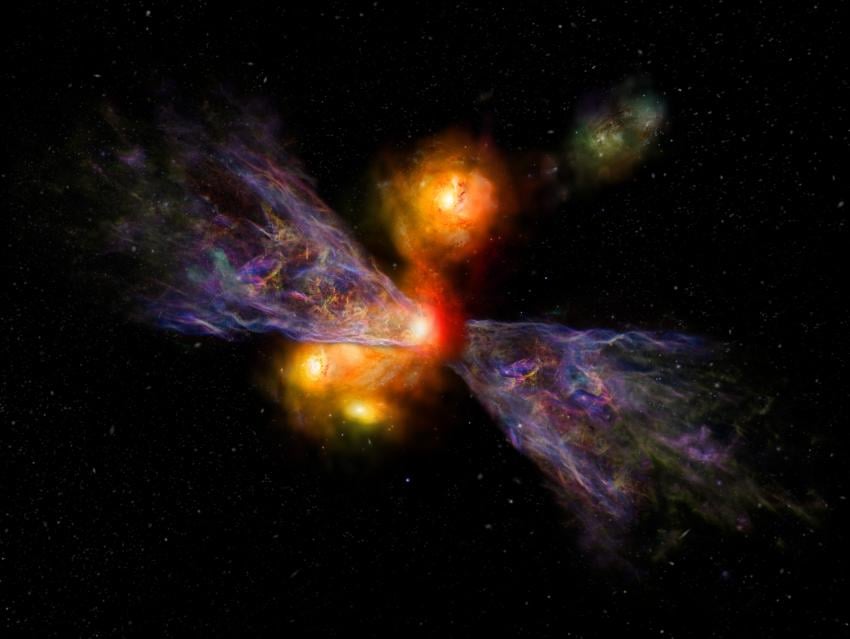
Astronomers are utilizing the James Webb Space Telescope (JWST) to investigate the early universe and understand the formation and evolution of galaxies. These nascent galaxies, considered the foundational structures for later cosmic structures, began as small accumulations of matter that gradually grew larger over time. The JWST's infrared capabilities are crucial for observing these distant, early objects, as their light is redshifted into the infrared spectrum. Studying these "shreds" of material that coalesced into early galaxies provides insights into the universe's formative stages. The research aims to uncover the processes that governed the development of these primordial galaxies. Understanding these early building blocks is key to comprehending the structure of the universe as we see it today. The telescope's advanced instruments allow for unprecedented detailed observations of these ancient cosmic entities. This investigation is part of a broader effort to map the universe's history and its fundamental constituents.
The James Webb Space Telescope's observations of early universe galaxies offer a critical lens into cosmic evolution. By studying these primordial structures, scientists can refine models of galaxy formation and the distribution of matter in the universe's infancy. This research provides empirical data to test theoretical frameworks, potentially revealing discrepancies that necessitate new cosmological paradigms. Understanding the factors that influenced these early galaxies, such as dark matter distribution and early black hole activity, is vital for a comprehensive picture of cosmic history. The data gathered will inform future astronomical research and the design of next-generation observatories, pushing the boundaries of our understanding of the universe's origins and development over billions of years.
AI-generated to prompt reflection — not editorial opinion, not advice, not a statement of fact. How this works.