Earth-like Exoplanet with Atmosphere Found in Habitable Zone of Distant Star
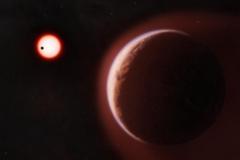
Researchers have discovered an Earth-like rocky planet orbiting within the habitable zone of a distant star, and it possesses an atmosphere. This marks a significant finding in the search for potentially habitable worlds beyond our solar system. The planet's location within the habitable zone suggests that conditions might be suitable for liquid water to exist on its surface, a key ingredient for life as we know it. The confirmed presence of an atmosphere further enhances its potential habitability, as an atmosphere can regulate temperature and shield the surface from harmful radiation. This discovery was made by a team of scientists analyzing data from advanced astronomical observations. Further studies are planned to characterize the planet's atmosphere and surface conditions more precisely. The identification of such a planet is a crucial step in understanding the prevalence of Earth-like worlds in the galaxy. This finding fuels ongoing efforts to detect and study exoplanets that could harbor life.
The detection of an Earth-like exoplanet with an atmosphere within a star's habitable zone represents a pivotal moment in exoplanetary science. This finding underscores the growing capability of astronomical instruments to identify worlds with potentially life-supporting characteristics. Future research will focus on atmospheric composition, which could reveal biosignatures or geological activity. The long-term implications involve refining models of planet formation and the conditions necessary for habitability across diverse stellar systems. This discovery encourages a continued investment in space exploration technologies and observational missions aimed at cataloging and characterizing potentially habitable exoplanets, contributing to humanity's understanding of its place in the cosmos.
AI-generated to prompt reflection — not editorial opinion, not advice, not a statement of fact. How this works.