Earth-like planet with atmosphere discovered in distant star's habitable zone
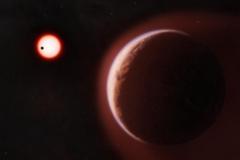
Researchers have identified an Earth-like rocky planet orbiting within the habitable zone of a distant star. Crucially, this exoplanet has been confirmed to possess an atmosphere. The discovery marks a significant step in the search for potentially habitable worlds beyond our solar system.
The presence of both a rocky composition and an atmosphere within the habitable zone is considered a key indicator for the potential to support liquid water on the planet's surface. This finding fuels further investigation into the planet's specific atmospheric composition and its implications for habitability.
Scientists are now focusing on analyzing the atmospheric data to understand its density, chemical makeup, and whether it could sustain life as we know it. This breakthrough provides valuable insights into planetary formation and the prevalence of Earth-like conditions elsewhere in the galaxy.
The detection of an Earth-like exoplanet with an atmosphere within a star's habitable zone represents a pivotal advancement in exoplanetary science. This finding underscores the growing capability of astronomical instruments to identify potentially life-supporting environments. Future research will likely focus on characterizing the atmosphere's composition to assess its potential for biosignatures. Understanding the prevalence of such planets could inform long-term astrobiological strategies and the search for extraterrestrial intelligence, highlighting the systemic importance of investing in advanced observational technologies.
AI-generated to prompt reflection — not editorial opinion, not advice, not a statement of fact. How this works.