Earth-like Planet with Atmosphere Discovered in Habitable Zone of Distant Star
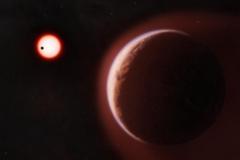
Researchers have identified an Earth-like rocky planet situated within the habitable zone of a distant star. This exoplanet has been confirmed to possess an atmosphere, a significant finding in the search for potentially habitable worlds beyond our solar system. The discovery marks a crucial step in understanding the prevalence of Earth-like planets and the conditions that might support life elsewhere in the universe. Further observations are expected to provide more details about the planet's atmospheric composition and surface characteristics. This finding contributes to the ongoing scientific endeavor to explore exoplanets and assess their potential for habitability. The presence of an atmosphere is a key indicator for potential habitability, as it can regulate temperature and shield the surface from harmful radiation. The location within the habitable zone suggests that liquid water could potentially exist on the planet's surface, another critical ingredient for life as we know it. This discovery fuels continued research into exoplanetary science and the possibility of life beyond Earth.
The detection of an Earth-like planet with an atmosphere in a star's habitable zone is a scientifically significant event. It highlights the increasing sophistication of exoplanet detection technology and our growing understanding of planetary formation processes. From a systemic perspective, this discovery reinforces the statistical likelihood that planets with conditions conducive to life may be common throughout the galaxy. Future research will likely focus on characterizing the planet's atmosphere in greater detail, seeking biosignatures that could indicate biological activity. This aligns with the long-term trajectory of space exploration, which increasingly prioritizes the search for extraterrestrial life and the potential for human expansion beyond Earth. The challenge ahead involves distinguishing between abiotic and biotic atmospheric components, a complex task that will drive advancements in observational astronomy and theoretical modeling.
AI-generated to prompt reflection — not editorial opinion, not advice, not a statement of fact. How this works.