Earth's Inner Core May Contain Extreme Hydrogen, Scientists Suggest
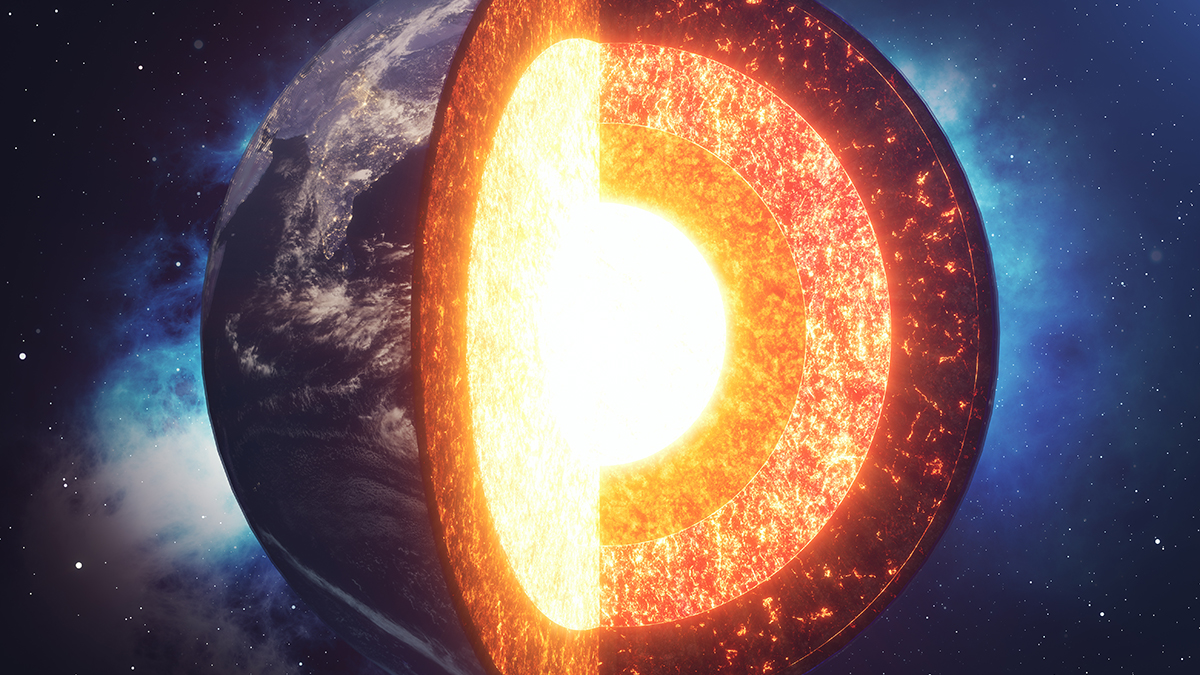
Scientists propose that Earth's inner core might be composed of a unique form of hydrogen, unlike any found on the planet's surface. This hypothetical hydrogen could exist in a liquid state and possess electrical conductivity. The research suggests that under the immense pressure and temperature conditions within the inner core, hydrogen might transform into an exotic metallic phase. This metallic hydrogen could play a significant role in generating Earth's magnetic field, which protects the planet from harmful solar radiation. Further research and experimental validation are needed to confirm the presence and properties of this extreme hydrogen. The findings could reshape our understanding of planetary formation and the internal dynamics of Earth. This theoretical discovery highlights the potential for unexpected states of matter to exist under extreme geophysical conditions. The study opens new avenues for exploring the composition of other planetary cores.
The hypothesis regarding extreme hydrogen in Earth's inner core presents a fascinating challenge to current geophysical models. If confirmed, this could necessitate a re-evaluation of the core's composition and its role in generating the geodynamo. Understanding the behavior of hydrogen under such extreme pressures and temperatures is crucial for refining planetary science. This research underscores the ongoing need for innovative experimental techniques and theoretical frameworks to probe the deep interior of our planet and others. The implications extend to understanding planetary evolution and the conditions required for habitability across the cosmos.
AI-generated to prompt reflection — not editorial opinion, not advice, not a statement of fact. How this works.