ECB: Eurozone Banks Tighten Lending Standards Amid Geopolitical Risks
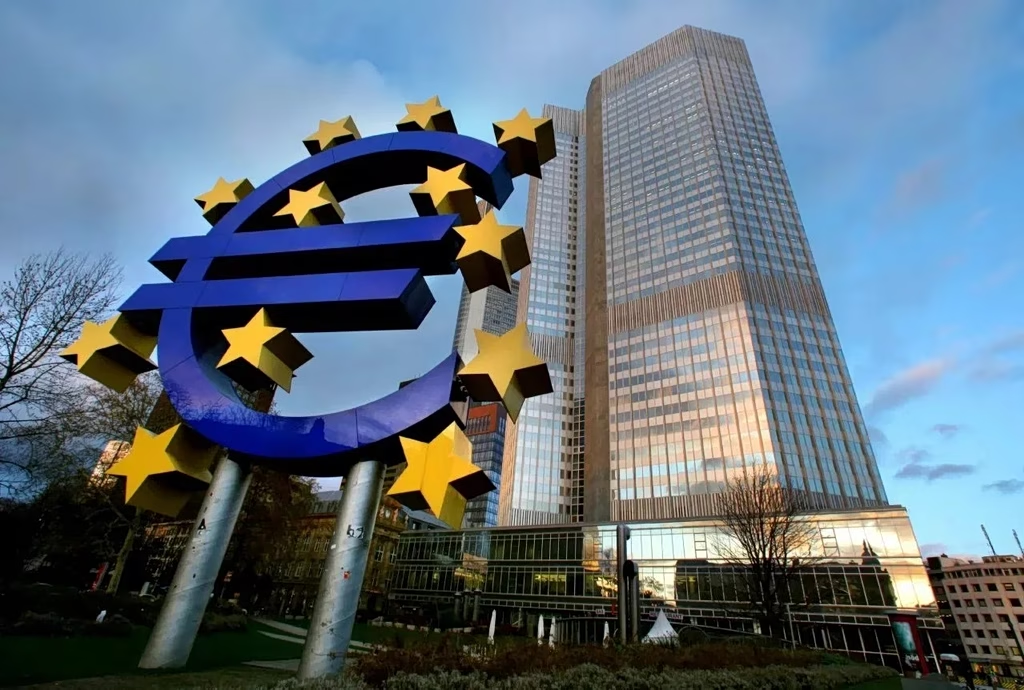
European banks in the Eurozone have become more cautious in granting new loans during the second quarter of 2026. This increased hesitancy is attributed to growing uncertainty stemming from geopolitical developments, energy-related risks, and the overall economic outlook, which are increasingly influencing their credit policies. The findings are detailed in the latest Bank Lending Survey conducted by the European Central Bank (ECB). The survey indicates a continued trend of stricter lending criteria, reflecting a more risk-averse approach by financial institutions. This shift in policy could have implications for businesses and individuals seeking credit, potentially leading to reduced access to funding. The ECB's report highlights the significant impact of external factors on the banking sector's willingness to extend credit. As geopolitical tensions and energy market volatility persist, banks are recalibrating their risk assessments and tightening the conditions under which loans are approved. This proactive measure by banks aims to safeguard against potential financial instability arising from these complex global challenges. The survey's results underscore the interconnectedness of global events and their direct influence on domestic financial markets and lending practices within the Eurozone.
The European Central Bank's findings reveal a prudent response by Eurozone banks to escalating geopolitical and energy-related uncertainties. By tightening lending standards, these institutions are proactively managing their risk exposure in a volatile global environment. This strategic adjustment, driven by a desire to maintain financial stability, reflects a rational assessment of potential future economic headwinds. The trend highlights the increasing interconnectedness of global security and economic health, suggesting that future credit availability will likely remain sensitive to international relations and energy market dynamics. Banks are balancing the need to support economic activity with the imperative of safeguarding their balance sheets, a critical consideration in the current decade's complex economic landscape.
AI-generated to prompt reflection — not editorial opinion, not advice, not a statement of fact. How this works.