ECO Currency: Renaming Won't Solve Fundamental Issues, Says Economist
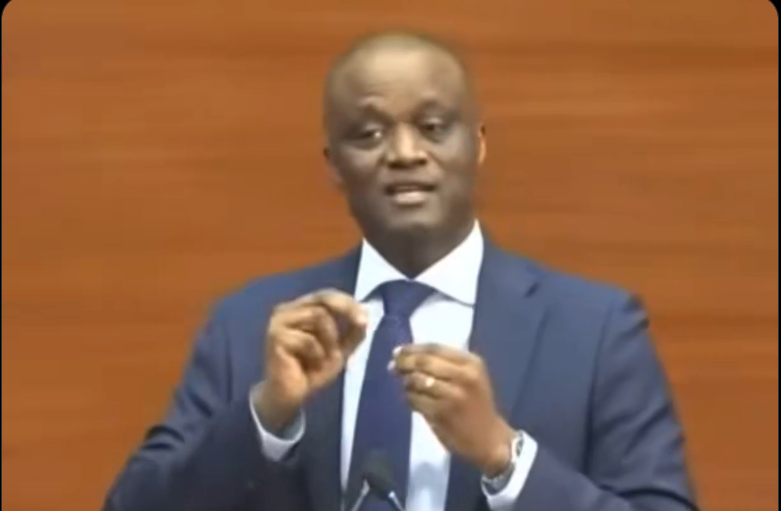
The potential adoption of the ECO currency by UEMOA countries has reignited discussions about the future of the West African currency. Abdourahmane Sarr, president of CEFDEL and former Minister of Economy, expressed his views on X, formerly Twitter. Sarr argues that merely changing the name of the CFA franc to ECO will not resolve the underlying economic challenges. He emphasizes that the fixed parity of the currency, guaranteed by France, remains the core issue. This fixed exchange rate mechanism has been a subject of debate for years, with critics arguing it hinders economic flexibility and development in the region. Sarr's statement suggests that deeper structural reforms are necessary for the ECO to truly represent an independent and beneficial monetary future for the member states. The debate highlights the complex relationship between the West African economies and their monetary policies, particularly concerning the influence of external guarantees.
The proposed rebranding of the CFA franc to ECO touches upon a long-standing debate regarding monetary sovereignty and economic development within the West African Economic and Monetary Union (UEMOA). While a name change might symbolize a move towards greater autonomy, the persistence of a fixed parity guaranteed by France suggests that the fundamental economic structures and dependencies may remain unaltered. This situation presents a classic governance challenge: balancing the symbolic gestures of independence with the practical realities of economic integration and external financial relationships. The core question for the region's future economic trajectory lies not in the currency's appellation, but in its operational framework and the underlying economic policies that shape its value and utility. Future developments will likely hinge on whether the ECO can evolve to accommodate greater flexibility, foster domestic investment, and reduce reliance on external anchors, thereby aligning its monetary policy more closely with the diverse economic needs of its member states in the coming decade.
AI-generated to prompt reflection — not editorial opinion, not advice, not a statement of fact. How this works.