Economist Conference Delivers Geopolitical and Diplomatic Signals
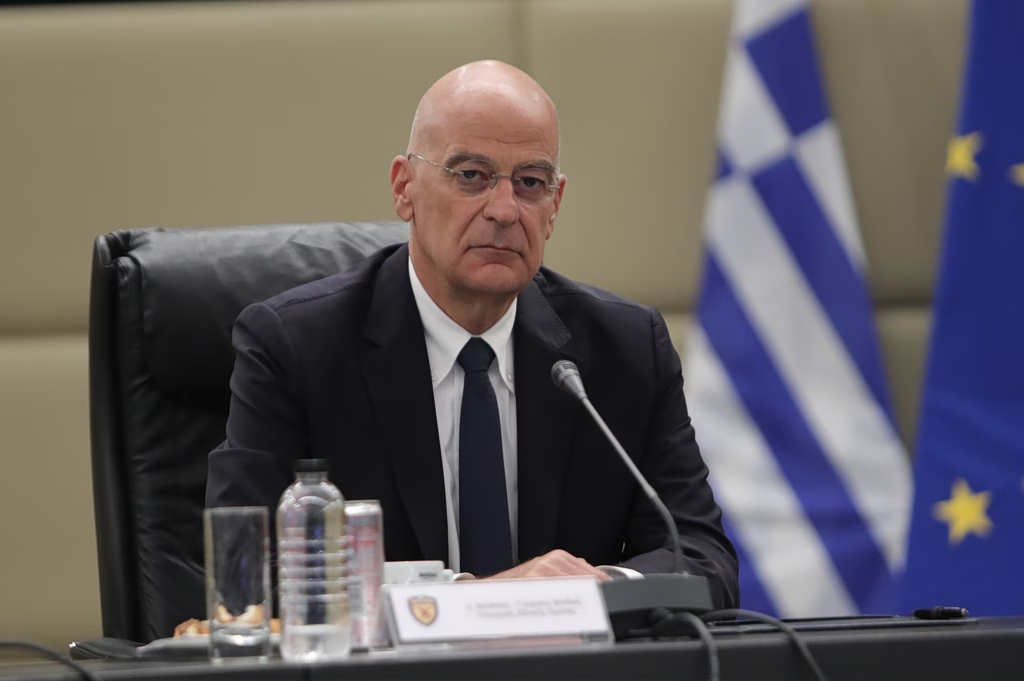
The second day of The Economist's conference, concluding this evening, generated news and conveyed diplomatic signals. The event has provided a platform for geopolitical discussions and analyses of NATO-related developments, adding nuanced perspectives to the complex and precarious new global landscape. Greek Foreign Minister Nikos Dendias was a participant, contributing to the discourse. The conference aims to shed light on current international affairs and foster dialogue among key stakeholders. The discussions are expected to cover a range of critical issues facing the international community. The insights shared are intended to inform policy decisions and strategic planning. The conference serves as a vital forum for understanding evolving geopolitical dynamics. Participants are engaging in robust debates on pressing global challenges. The overall atmosphere suggests a focus on strategic foresight and collaborative solutions.
The Economist's conference serves as a significant platform for high-level discourse on geopolitical and diplomatic matters. By bringing together various stakeholders, it facilitates the exchange of perspectives on complex international issues, particularly concerning NATO and the broader global security environment. Such forums are crucial for synthesizing diverse viewpoints and identifying potential areas of convergence or divergence in policy approaches. The insights generated can inform strategic decision-making and contribute to a more nuanced understanding of evolving international relations in the coming decade, especially as technological advancements and shifting power dynamics continue to reshape the global order.
AI-generated to prompt reflection — not editorial opinion, not advice, not a statement of fact. How this works.