Economist Hossain Zillur Rahman: Citizens Hold the Key to Change
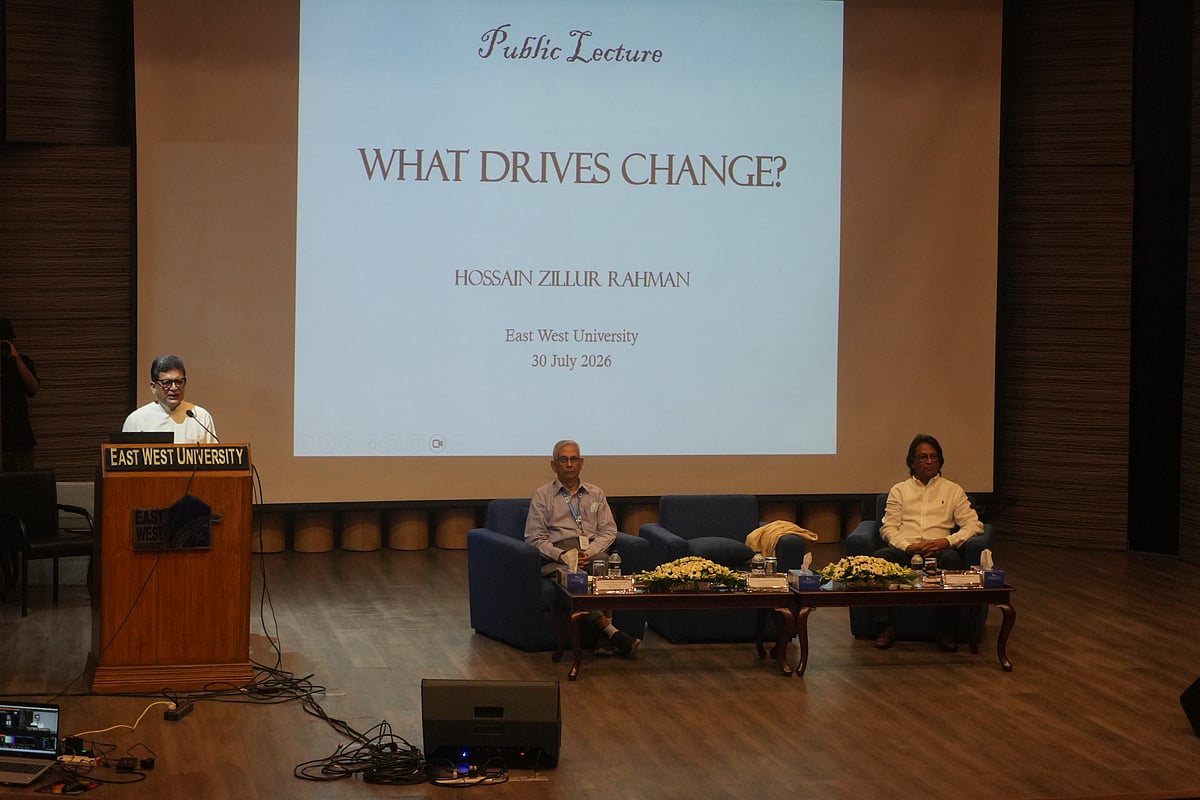
Noted economist and BRAC Chairperson Hossain Zillur Rahman delivered a public lecture titled 'The Key to Change: Today's Questions' at East West University on Thursday, July 30th. He identified six driving forces behind change: narrative, institutions, social norms, initiatives, power, and interested groups. Rahman elaborated on the positive and negative impacts of these forces on the economy. He argued that Bangladesh must move beyond a cheap labor-based economy, citing the garment and remittance sectors, and noted the failure to fully embrace democratic methods in state practices and capitalize on the demographic dividend. Rahman suggested reforms including rethinking the state's role to serve people rather than dominate them, enhancing professionalism among the country's experts, improving educational quality with foresight, and fostering social norms of cleanliness and transparency. He highlighted the inherent desire for change among Bangladeshi citizens, citing their initiatives and innovations during crises in 1947, 1971, and 2024 as positive indicators. Professor Dr. Mohammad Forashuddin, Chairperson of the East West University Board of Trustees, presided over the event, emphasizing that the benefits of development are not reaching vulnerable populations and stressing the need for improved education, health, and social equity. The lecture also included welcome remarks from East West University Vice-Chancellor Professor Dr. Shams Rahman, with university trustees, faculty, students, and staff in attendance.
This lecture highlights a critical juncture for Bangladesh's economic and social development, moving beyond traditional growth drivers like cheap labor. The identified driving forces—narrative, institutions, norms, initiatives, power, and groups—provide a framework for understanding systemic inertia and potential progress. The call for a state that serves its people, enhanced professionalism, and improved education points to governance and human capital as key levers for future success. The analysis suggests that while a strong citizen-led desire for change exists, its effective translation into positive outcomes depends on institutional reform and equitable distribution of development benefits. Future policy considerations should focus on strengthening these institutional mechanisms to harness citizen initiatives and address the identified gaps in fairness and professional standards, ensuring that progress is inclusive and sustainable over the next decade.
AI-generated to prompt reflection — not editorial opinion, not advice, not a statement of fact. How this works.